You've spent hours baking, meticulously layering, and carefully frosting. You step back to admire your tiered cake, a vision of sugar and celebration. Then, in what feels like slow motion, you see it—a subtle lean, a crack in the frosting, or worse, a full-on structural failure. The top tier slides, and your heart sinks. This disaster isn't just bad luck; it's almost always the result of one or more common, preventable tiered cake mistakes.
I've been decorating cakes for over a decade, and I've made—and seen—every error in the book. The good news? Once you know what to look for, you can avoid them completely. This guide isn't about vague advice. We're diving into the specific, often overlooked missteps that happen between the oven and the display table.
What’s Inside This Guide
- Mistake 1: Choosing the Wrong Cake Foundation
- Mistake 2: Underestimating the Support Structure
- Mistake 3: Ignoring Frosting Consistency & Crumb Coats
- Mistake 4: Rushing the Assembly Process
- Mistake 5: Skipping Proper Leveling and Filling
- Mistake 6: Forgetting About Transportation
- Mistake 7: Disregarding Environmental Factors
- Mistake 8: Over-Decorating Without Accounting for Weight
- Mistake 9: The Final Hurdle—Cutting and Serving Wrong
- Mistake 10: Making Your First Attempt for a Critical Event
- Your Tiered Cake Questions, Answered
Mistake 1: Choosing the Wrong Cake Foundation
It starts with the cake itself. A common, heartbreaking error is using a light, fluffy cake recipe that can't bear weight. Think angel food or chiffon. They're delicious but structurally akin to a cloud. For tiers, you need a cake with a tighter, more robust crumb.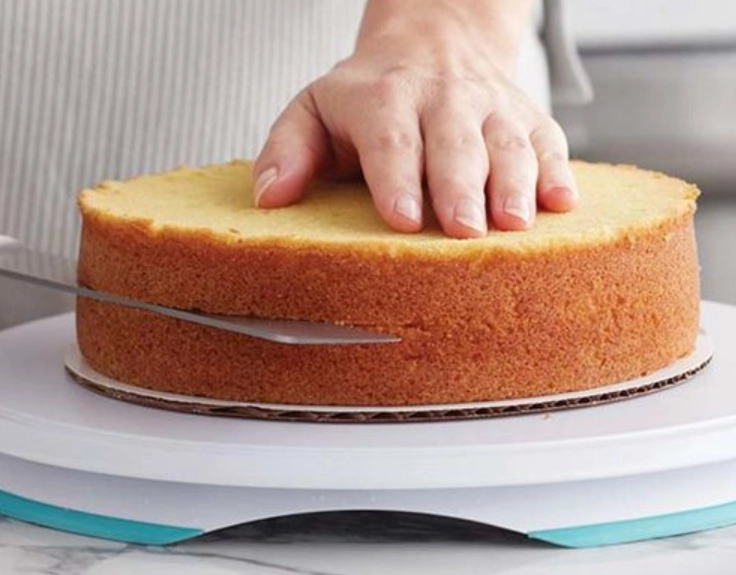
My go-to is a classic butter-based pound cake or a dense chocolate mud cake. These recipes have less air whipped in, making them less prone to compression under the weight of the tiers above. If you love a lighter sponge, you can adapt it, but you must increase its strength. I often add an extra egg or substitute some flour with ground almonds for a more substantial bite.
I learned this the hard way at my first wedding cake gig. The client wanted a lemon sponge. It tasted amazing but was so delicate that during assembly, my fingers left permanent dents just from handling the layers. Never again.
Mistake 2: Underestimating the Support Structure
This is the number one cause of catastrophic collapse. Dowels (or straws) aren't a suggestion; they're non-negotiable engineering. The mistake isn't just forgetting them—it's using too few, placing them wrong, or using flimsy materials.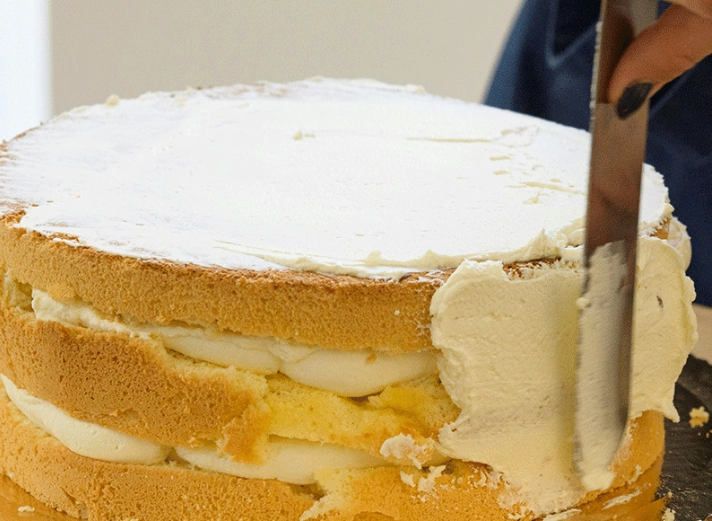
Here’s a quick reference I wish I had when I started:
| Tier Size (Diameter) | Minimum Number of Dowels | Dowel Placement Pattern | Material Recommendation |
|---|---|---|---|
| 6-inch to 8-inch | 4 | Square, about 1 inch from edge | Plastic or wooden dowels |
| 10-inch to 12-inch | 5 to 6 | Circle or pentagon pattern | Thick plastic or wooden dowels |
| 14-inch and larger | 7+ | Inner and outer circle patterns | Central support plate & dowels |
The biggest subtle error? Not cutting ALL the dowels supporting a tier to the EXACT same height. If one is even a millimeter taller, it creates a pivot point. The tier above will wobble and eventually crack the frosting or shift. Use a ruler and a sharp pencil to mark them all at once before cutting.
Pro Tip: For heavy tiers (especially fruitcake or mud cake), insert a thin cake board the same size as the tier on top of the dowels, then place the next tier on that. It distributes the weight more evenly than dowel points alone. The American Culinary Federation's baking resources often emphasize this distributed load principle for large-scale pastry work.
Mistake 3: Ignoring Frosting Consistency & Crumb Coats
Buttercream that's too soft is a silent killer. On a warm day, soft frosting acts like lubricant between tiers, allowing them to slide. The mistake is making one batch of frosting and using it for everything—filling, crumb coat, and final decor.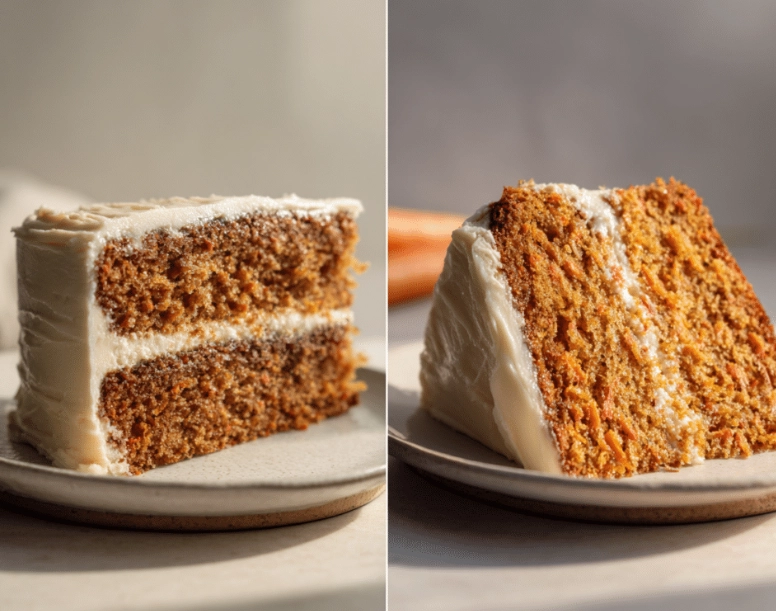
Your filling and crumb coat frosting should be slightly softer for easy spreading. But your final exterior frosting, especially what goes between tiers and on the final coat, needs to be stiffer. Think of it as edible mortar. Chill your cake after the crumb coat until the frosting is firm to the touch. This seals in crumbs and creates a grippy surface for the next layer of frosting and the next tier.
I see people skip the crumb coat all the time to save 30 minutes. It always costs them more time fixing crumbs in the final coat or dealing with unstable adhesion.
Mistake 4: Rushing the Assembly Process
Assembly is not a single, continuous event. It's a series of steps punctuated by chilling. The classic rush job: stacking all three warm, freshly frosted tiers in one go and then wondering why it's leaning an hour later.
Here's a non-negotiable timeline from my own process:
- Day 1 (or early): Bake all cake layers. Cool completely, wrap tightly, and freeze. Frozen cakes are infinitely easier to level and handle.
- Day of Assembly: Level, fill, and apply crumb coat to each tier individually. Chill each tier for at least 30 minutes after crumb coat.
- Apply final frosting to the bottom tier. Chill. Insert dowels.
- Place the middle tier. Chill for 20 minutes. This lets the frosting "set" and bear weight.
- Insert dowels into the middle tier, then place the top tier. Final chill before any delicate decoration.
Chilling is your best friend. It firms up the buttercream, stabilizes the structure, and gives you time to breathe.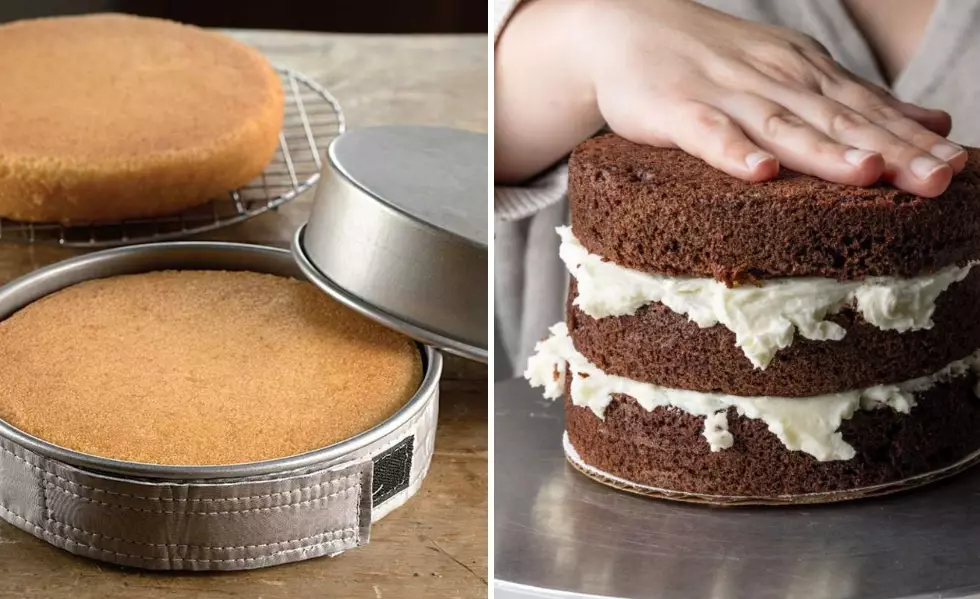
Mistake 5: Skipping Proper Leveling and Filling
An unlevel cake layer is a tilted foundation. You can't build a straight skyscraper on a slanted base, and you can't stack a straight cake on a dome. Use a serrated knife or a cake leveler. Don't eyeball it.
The filling mistake? Using too much. A thick, slippery layer of jam or curd between cakes, without a buttercream dam, will cause the layers to slide apart under pressure. Pipe a ring of stiff buttercream around the edge of your cake layer first, then fill the center with your softer filling. The buttercream dam contains it.
The Filling-to-Frosting Imbalance
A related, subtle error is having a filling that is a different consistency or acidity than your frosting. A very wet lemon curd next to Swiss meringue buttercream can sometimes "melt" the buttercream where they meet, weakening the bond. If using a very wet filling, consider a thin layer of ganache or a buttercream-soaked cake strip as a barrier.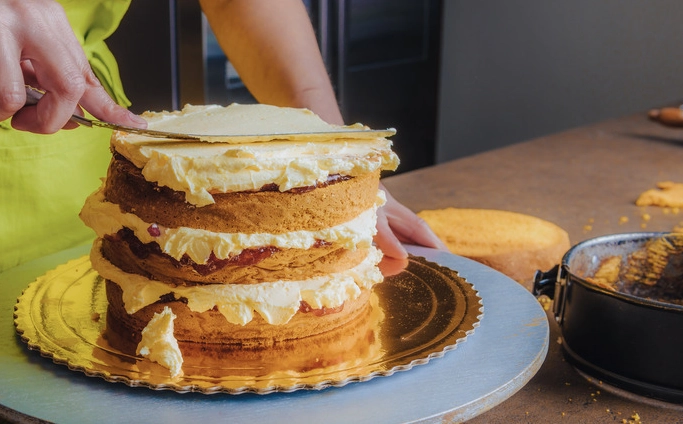
Mistake 6: Forgetting About Transportation
You built a perfect cake on your kitchen counter. Now you have to move it. This is where many failures happen. The cake must be transported on a non-slip surface. Place your finished cake on a sturdy cake board, then place that board on a damp paper towel laid on your car's flat floor or seat. The damp towel creates suction and prevents sliding.
Never hold a tiered cake in your lap. Sudden stops are disastrous. Use the passenger footwell if it's flat. Drive slowly, take corners wide, and avoid potholes like they're landmines. I always keep a small emergency kit in the car: extra frosting, a spatula, dowels, and a paper towel roll for cleanup.
Mistake 7: Disregarding Environmental Factors
Buttercream is basically flavored butter. What happens to butter in a hot room? It melts. A common mistake is assembling a cake in a cool kitchen, then displaying it for hours in a warm venue under direct lights.
If you know the venue will be warm, consider using a more heat-stable frosting option for the structural parts. A crusting American buttercream (made with shortening and butter) or even a thin layer of fondant over buttercream can act as a protective shell. For a fully butter-based frosting, you must keep the cake refrigerated until the absolute last possible moment.
Humidity is another stealth enemy. It can prevent buttercream from forming a crust and make fondant sticky and soft.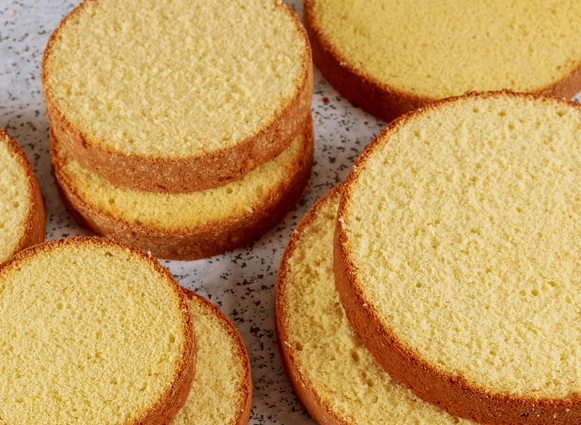
Mistake 8: Over-Decorating Without Accounting for Weight
Heavy sugar flowers, intricate chocolate collars, cascading fresh fruit—these are gorgeous but heavy. The mistake is adding all this weight to the top or sides of a tier without reinforcing the support underneath.
If you're adding a heavy topper or side decorations, you may need to insert an extra dowel directly underneath that spot for localized support. For cascading decorations, ensure the weight is primarily supported by the bottom tier, not pulling down from an upper tier. Sometimes, it's smarter to attach heavy decor directly to the cake board or separators rather than the cake itself.
Mistake 9: The Final Hurdle—Cutting and Serving Wrong
After all that work, a clumsy cutting job can destroy the cake's stability for those waiting for seconds. Don't just hack into the top tier. You need to dismantle it methodically.
- Remove the top tier entirely if it's a keepsake.
- Remove any dowels from the now-exposed middle tier before cutting it. You don't want someone biting into a plastic rod.
- Cut slices from the middle tier inward, not by removing the whole tier from the cake. This maintains the support for the remaining cake.
A long, thin, sharp knife dipped in hot water and wiped clean between cuts is the best tool.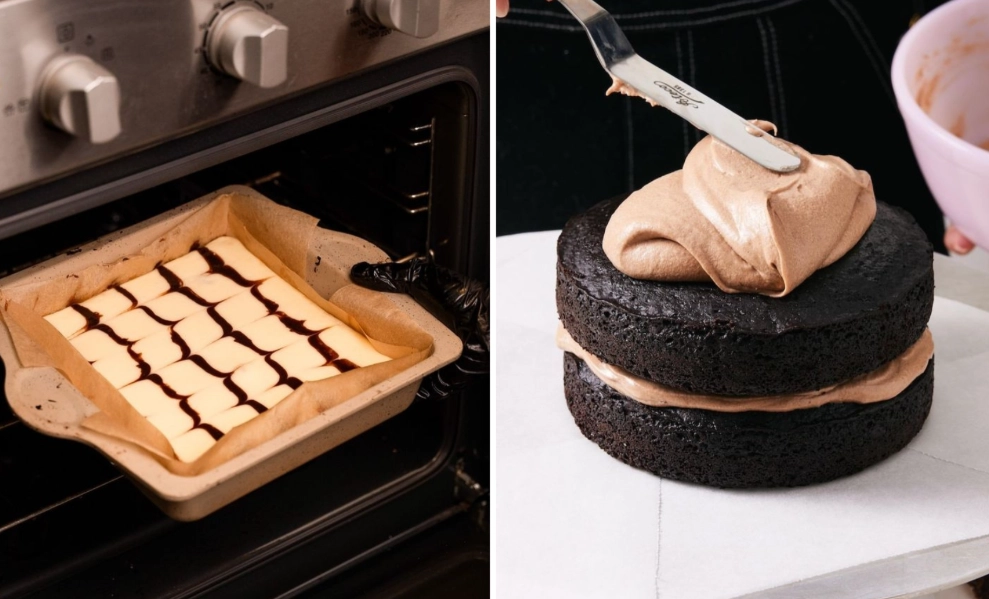
Mistake 10: Making Your First Attempt for a Critical Event
The single biggest error is choosing your best friend's wedding or a major birthday to try your first-ever tiered cake. The pressure is immense, and everything takes longer than you think.
Do a full-scale practice run at least once. Bake, stack, and decorate a 2 or 3-tier cake with dummy tiers or inexpensive cake mixes. Time yourself. Figure out where you get stuck. This rehearsal is invaluable and takes the panic out of the real event. You'll identify your personal weak spots—maybe it's getting smooth sides or inserting dowels straight.
My first practice cake was a hilarious lean-to. It tasted fine, but it taught me more than any tutorial video.
Your Tiered Cake Questions, Answered
Can I use regular cake recipes for tiered cakes, or do I need special ones?
You can use regular recipes, but you must vet them for density. Perform a simple "squish test" on a baked layer. Gently press the top. If it springs back completely and feels light, it might need reinforcement for lower tiers. For upper, smaller tiers, it's usually fine. For any tier over 8 inches or supporting weight, I modify recipes by reducing leavening slightly or adding a binding ingredient like pudding mix.
How far in advance can I actually assemble a tiered cake?
The full, finished assembly should happen as close to the event as possible, ideally within 12-24 hours. However, you can do almost all the work ahead. Cake layers freeze beautifully for weeks. You can crumb coat tiers and freeze them for a few days. The day before, thaw crumb-coated tiers in the fridge, then do your final frosting and stacking. This staged approach is the secret to staying sane.
My cake always seems to have a slight lean after stacking. What's the fix?
A lean usually points back to Mistake #2 or #5. First, ensure every cake layer is perfectly level. Second, double-check that all your dowels are exactly the same height. Use a carpenter's level on the cake board as you place each tier. If you catch a lean early, you can sometimes gently shift the tier before the frosting sets. If it's minor, strategically placed decorations (a ribbon, a flower cluster) can visually disguise it.
Is it better to stack cakes directly or use plate separators?
For beginners, plate separators (columns) are more forgiving because they transfer weight directly to the base. For the modern "floating" look with hidden supports, you must use dowels and internal boards. Separators are stable but limit your design. Hidden supports look more professional but require more precision. I recommend mastering dowels; they give you ultimate design flexibility. The Wilton School of Cake Decorating, a major industry resource, focuses heavily on proper dowel technique in its professional courses.
What's the one tool I shouldn't cheap out on for tiered cakes?
A turntable. A sturdy, heavy, smooth-spinning turntable is worth every penny. Trying to frost and smooth the sides of a tall, tiered cake without one is an exercise in frustration and leads to uneven coverage. A good turntable, paired with a bench scraper, gives you control and professional results. My first cheap plastic one wobbled—it made everything harder.
Leave a Comment