Quick Guide
- Why Bother Frosting Anyway? It's More Than Just Looks
- Essential Tools and Materials (No, You Don't Need All the Fancy Stuff)
- The Step-by-Step Process: How to Frost a Cake from Start to Finish
- Troubleshooting Common Frosting Issues
- Frequently Asked Questions (Stuff You're Probably Wondering)
- Taking It Further: Pro Tips for When You're Feeling Confident
- Wrapping It Up
Let's be honest. The idea of learning how to frost a cake can feel a bit intimidating. You see those perfectly smooth sides and sharp edges on baking shows and in fancy patisserie windows, and it's easy to think you need some kind of magical pastry chef gene to pull it off.
You don't.
I remember my first attempt. It was for my dad's birthday. The cake itself was fine, a simple vanilla thing. But the frosting? It looked like a toddler had attacked it with a spackling knife. Crumbs everywhere, lopsided, with more frosting on my apron than on the cake. I was ready to give up and just buy a tub of ice cream instead.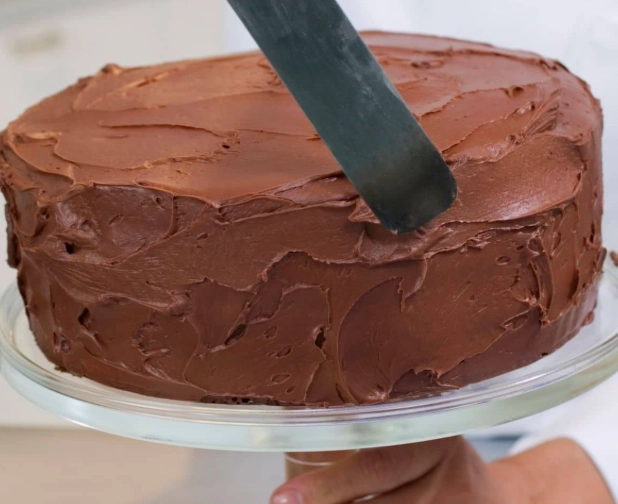
But here's the secret nobody tells you when you're starting out: frosting a cake is more about patience and the right moves than it is about innate talent. It's a skill, like riding a bike. Once you learn the basic sequence—the crumb coat, the chill, the final layer—it clicks. And suddenly, you're not just slathering on sugar; you're finishing a creation.
This guide is the one I wish I'd had. We're going to walk through the whole process, step-by-step, without any fancy jargon or assumptions that you own a kitchen full of professional gear. We'll cover what you really need, what you can skip, and how to troubleshoot the common mess-ups (because we all have them). By the end, you'll have a clear, actionable plan for how to frost a cake that looks fantastic and, more importantly, tastes even better.
Why Bother Frosting Anyway? It's More Than Just Looks
Before we dive into the how, let's talk about the why. Sure, a beautifully frosted cake is a feast for the eyes. But a good layer of frosting does some heavy lifting that you might not consider.
First, it's a seal. It locks in moisture, keeping your cake from drying out and turning into a sad, crumbly brick overnight. Ever had a naked cake go stale by the next day? Frosting prevents that.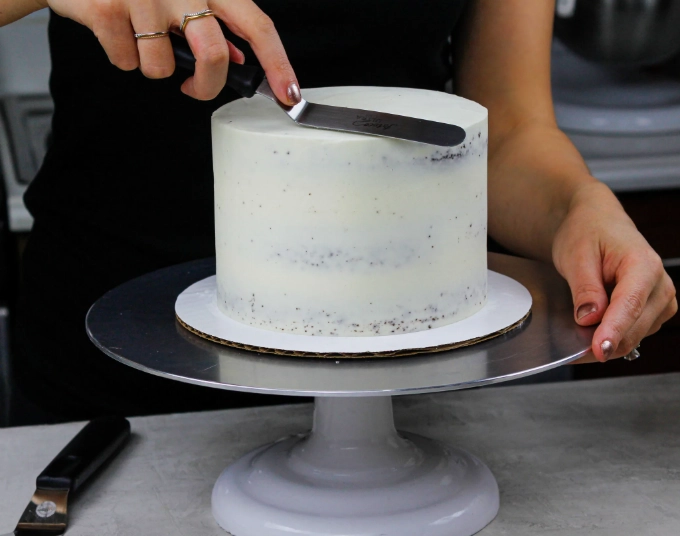
Second, it's a flavor carrier. Buttercream, cream cheese frosting, ganache—they're not just sweet; they're a flavor component that complements or contrasts with the cake itself. A rich chocolate cake with a tangy cream cheese frosting is a classic for a reason.
And third, it's structural. A good frosting can hide a multitude of sins (slightly uneven layers, I'm looking at you) and provides a stable canvas for any decorations. It's the foundation of your edible art.
Learning how to frost a cake properly transforms your baking from a simple recipe-following exercise into a true creation. It's the difference between making a cake and presenting a cake.
Essential Tools and Materials (No, You Don't Need All the Fancy Stuff)
Walk down the baking aisle, and you'll be bombarded with gadgets. You don't need most of them. Here's the honest breakdown of what's crucial, what's helpful, and what's just marketing.
Gathering Your Equipment
The absolute non-negotiables are pretty simple:
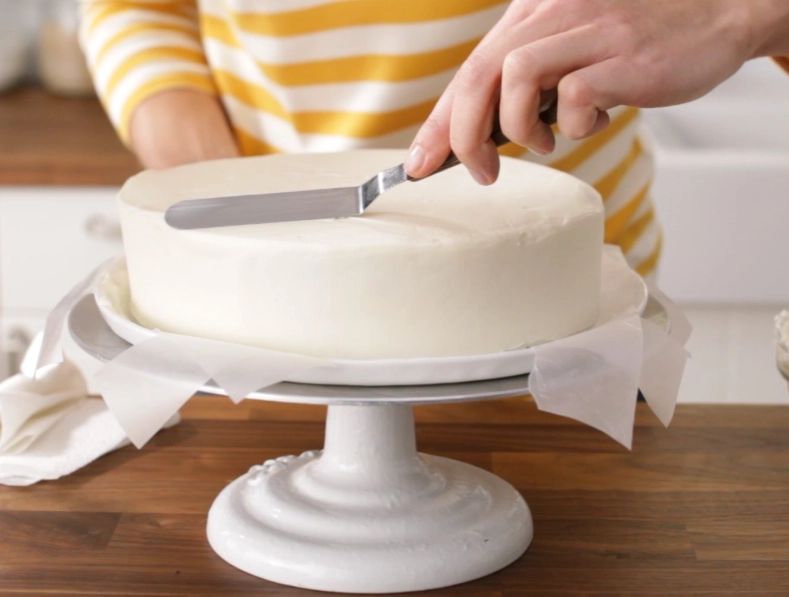
- A turntable: This is the single biggest game-changer. Spinning the cake, not moving your arm in a circle, is the key to smooth sides. A cheap plastic one from a craft store works perfectly. If you're really in a pinch, invert a bowl and put your plate on it, but trust me, a turntable is worth the $15.
- An offset spatula: This is the long, bent knife-looking tool. The offset handle keeps your knuckles out of the frosting, giving you way more control than a regular butter knife. A small one (around 4-5 inches) is ideal for detail work and getting into corners.
- A bench scraper or large straight spatula: This is for creating those smooth, clean sides. A metal bench scraper is best, but a large, flat spatula or even the long side of a large knife can work in a pinch.
- Piping bags and tips (optional but fun): For borders and decorations. Start with a large star tip (like a 1M) and a round tip. Disposable bags are less messy for beginners.
Choosing Your Frosting
Not all frostings are created equal, especially when you're learning. Some are forgiving; some are divas. Your choice here will massively impact your experience learning how to frost a cake.
For absolute beginners, I swear by American Buttercream. It's just butter, powdered sugar, a bit of milk or cream, and flavoring. It's stable, easy to make, and very forgiving. If you mess up, you can just scrape it off and reapply. The downside? It can be very sweet.
Swiss or Italian Meringue Buttercream is less sweet and has a silky, professional texture. It's dreamy to work with once you get the hang of making it (which involves heating egg whites and sugar). It's smoother but can be trickier if your kitchen is warm.
Cream Cheese Frosting is delicious but soft. It's best for a more rustic, "dolloped" look rather than super sharp edges. Always make sure it's well-chilled before you start.
Whipped Cream Frosting is light and not too sweet, but it's the most fragile. It deflates easily and doesn't hold sharp edges well. Save this for when you're feeling confident.
My advice? Start with a simple American buttercream. Master the technique with it. Then, branch out. The process of how to frost a cake is largely the same; you're just working with a different material.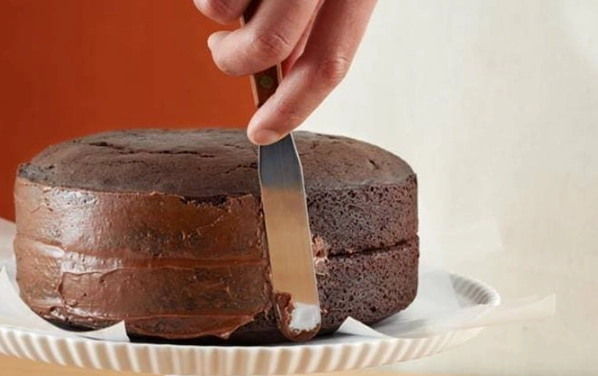
Prepping the Cake Itself: The Make-or-Break Step
This is where most people rush, and it shows. You cannot frost a warm, crumbly, uneven cake well. Period.
Next, leveling. Unless your cakes come out perfectly flat (they almost never do), you need to slice off the dome. Use a long serrated bread knife or a cake leveler. Saw gently back and forth. Those scraps are the baker's treat—enjoy them.
Now, the dirty secret: most professional bakers give their cakes a quick soak. Not a drench, just a light brush of simple syrup (equal parts sugar and water, heated until dissolved, then cooled). This adds an incredible amount of moisture and ensures every bite is tender. It's a pro tip that takes 5 minutes and elevates your cake from good to sublime.
The Step-by-Step Process: How to Frost a Cake from Start to Finish
Okay. Your cakes are cool, leveled, and maybe even lightly syruped. Your frosting is made and ready. Your tools are assembled. Let's do this.
Step 1: The Crumb Coat (Your Secret Weapon)
The crumb coat is a thin, initial layer of frosting that traps all the loose crumbs. It's like a primer for paint. Skipping this is the number one reason people end up with a speckled, messy-looking final coat.
- Place your first cake layer on the turntable, on a cardboard round or directly on your serving plate. Put a small dollop of frosting underneath to keep it from sliding.
- Using your offset spatula, spread a generous amount of frosting on top. Take it right to the edges. This is your filling.
- Place the second layer on top, pressing down gently. Make sure it's level.
- Now, take a small amount of frosting and spread a very thin layer over the entire cake—top and sides. Don't worry about making it pretty. You're just trying to capture crumbs and create a sticky surface for the final coat. It should look messy, and you should be able to see the cake through it in spots.
This is the core of knowing how to frost a cake without crumbs. It seems like an extra step, but it saves you so much frustration later.
Step 2: The Chill
Once your crumb coat is on, pop the whole cake into the refrigerator for at least 30 minutes, or the freezer for 15. This sets the frosting into a firm shell. When you touch it, it shouldn't feel sticky or soft.
This chill is non-negotiable. It gives you a solid, crumb-free surface to work on for the final coat. It makes all the difference.
Step 3: The Final Frosting Layer
Now for the fun part—the finish. Take your chilled cake out.
- Pile a large amount of frosting on top of the cake.
- Using your offset spatula, push the frosting from the center outwards and over the edges, letting it fall down the sides. Don't be shy with the amount; it's easier to have too much and scrape it off than to try and spread too little.
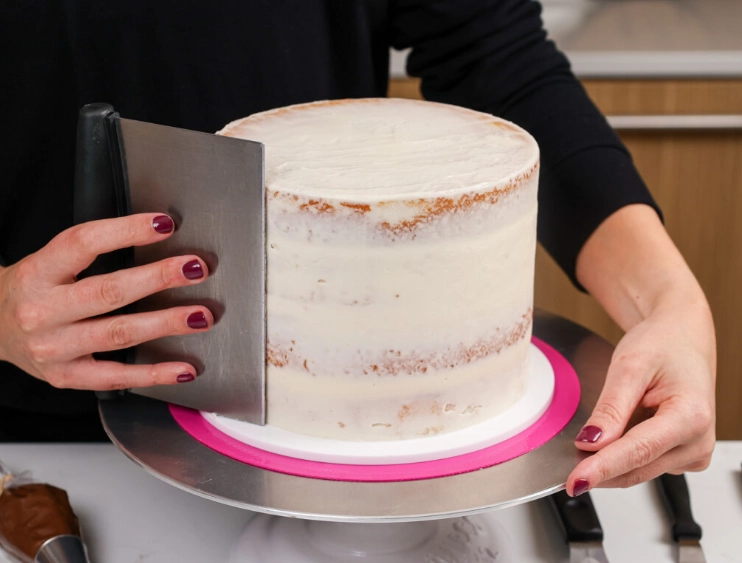
- Once the sides are roughly covered, hold your bench scraper vertically against the side of the cake. Rest it lightly on the turntable. Now, slowly spin the turntable with your other hand. The scraper will smooth the frosting and remove the excess. You might need to do this a few times, adding a bit more frosting to any low spots. This is where the magic happens.
- For the top, use your offset spatula to smooth the frosting from the edges toward the center. You can also use the bench scraper held flat.
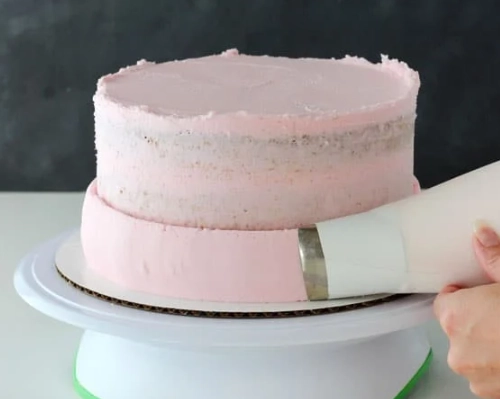
The goal here isn't necessarily mirror-smooth perfection on your first try (that takes practice). The goal is even, clean coverage. A slightly "homemade" smooth look is charming and delicious.
Step 4: Decorating & The Final Touch
Once your base is smooth, you can add textures (like swoops with a spoon), pipe borders, or add sprinkles. If you're going for a super sharp edge, you can heat your bench scraper under hot water, dry it quickly, and do one final, gentle spin—the heat melts the tiniest outer layer for a glass-like finish.
And then, honestly? Let it sit for an hour before slicing. The flavors settle, the frosting sets just a bit, and you get a cleaner slice.
Troubleshooting Common Frosting Issues
Things will go wrong. It's part of baking. Here's how to fix the most common problems without starting over.
| Problem | Likely Cause | Quick Fix |
|---|---|---|
| Crumbs in the final frosting | Skipped or too-thin crumb coat; cake wasn't cool; over-aggressive spreading. | Scrape off the messy section, apply a bit more frosting to the spot, and smooth again. Chill for 10 mins if needed. |
| Frosting is too soft/runny | Kitchen is too warm; butter was too soft; frosting needs chilling. | Put the whole bowl of frosting in the fridge for 15-20 minutes. Re-whip briefly before using. |
| Frosting is too stiff/grainy | Too much powdered sugar; not enough liquid; cold ingredients. | Add a teaspoon of milk, cream, or a flavoring liquid. Whip for a full 2-3 minutes to incorporate air. |
| Uneven, lumpy sides | Not using a turntable; not enough frosting on the final coat. | Add more frosting to the low spots and use the bench scraper technique again. A turntable is key for even pressure. |
| Frosting pulls and tears | Overworking; crumb coat wasn't chilled enough; cake is too dry. | Stop smoothing. Chill the cake for 15 mins. Apply a very thin new layer of frosting over the torn area and smooth gently once. |
Frequently Asked Questions (Stuff You're Probably Wondering)
Taking It Further: Pro Tips for When You're Feeling Confident
Once you've mastered the basic method of how to frost a cake smoothly, the world opens up. Here are a few next-level ideas:
- The "Viva Paper Towel" Method: After your final smooth coat, gently press a clean, untextured Viva paper towel (or parchment paper) against the sides and top. The slight texture can create an impeccably smooth finish as it lifts away tiny imperfections.
- Textured Sides: Use a comb scraper, the tines of a fork, or even a piece of crumpled parchment paper to create intentional patterns on the sides of your cake after the final coat.
- Filling a Piping Bag Cleanly: Stand the bag in a tall glass, cuff the top over the rim, and then fill it. No more two-handed mess.
- Using a Cake Smoother: These acrylic disks can help achieve those ultra-sharp top edges with practice.
Wrapping It Up
Learning how to frost a cake isn't about achieving Instagram perfection on your first try. It's about understanding a process. It's about the crumb coat, the chill, the smoothing spin. It's about choosing a forgiving frosting and giving yourself the grace to have a first cake (or a fifth cake) that's a little lopsided.
The real joy comes from sharing something you made, from start to finish, with your own hands. A cake you frosted yourself, no matter how "perfect" the sides are, carries a warmth and a story that a store-bought one never can.
So go bake a simple cake.
Whip up a batch of buttercream.
And give it a whirl. Follow these steps, take your time, and remember: even the most beautiful, smooth cakes started with a first attempt that probably had a few crumbs in the frosting.
You've got this.
Leave a Comment