Let's be honest. Pie crust recipes can feel intimidating. Long ingredient lists, special equipment, warnings about over-mixing... it's enough to make you grab a store-bought shell and call it a day. But what if I told you the secret to a flaky, tender, perfect pie crust is hiding in just four basic ingredients you probably already have? No shortening, no vinegar, no egg. Just flour, fat, water, and salt. This isn't a magic trick—it's understanding how those four components work together. I've been baking pies for over a decade, and this minimalist approach consistently beats more complicated recipes. The simplicity forces you to focus on technique, which is where real pastry success lives.
What’s Inside This Guide
Why a 4-Ingredient Crust Actually Works Better
Complexity is often a crutch. Adding extra ingredients like vinegar, sugar, or leavening can mask fundamental errors in your technique. With only four elements, each one plays a critical, non-negotiable role. Flour provides structure. Fat (butter) creates flakiness and flavor. Water binds it. Salt enhances everything. When you master the balance between these four, you develop an intuitive feel for the dough. You start to recognize the texture of perfect pea-sized butter pieces, you feel when the dough just comes together, and you understand why keeping everything cold isn't just a suggestion—it's the law. This recipe strips pastry back to its essentials, giving you control and predictable results every single time.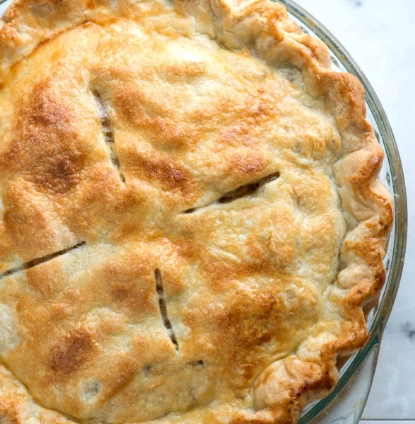
Your 4 Ingredients: A Deep Dive
Don't just measure—understand. The quality and treatment of each ingredient here is everything.
| Ingredient | Role | Pro-Tip & Why It Matters |
|---|---|---|
| All-Purpose Flour | Forms the dough's structure (gluten). | Don't use cake or bread flour. We need the moderate protein content of AP flour (around 10-12%). For consistent results, fluff your flour, spoon it into the cup, and level it off. Better yet, use a kitchen scale (125g per cup). |
| Unsalted Butter | Creates flakiness, tenderness, and rich flavor. | Must be very cold. I cube mine and freeze it for 15 minutes before starting. The cold solid fat creates steam pockets during baking = flakiness. Unsalted lets you control the salt level. European-style butter (higher fat) is a game-changer for flavor. |
| Ice Water | Hydrates the flour, binding the dough. | The biggest variable. It must be ice-cold to keep the butter firm. I add a few ice cubes to a glass of water and measure from that. You'll rarely need the full amount listed—add slowly. |
| Salt | Enhances flavor and strengthens gluten slightly. | Fine sea salt or table salt dissolves evenly. If you only have kosher salt, use about 1.5 times the amount (it's less dense). Salt is a flavor enhancer, not just a seasoning—don't skip it. |
My Non-Consensus View on Fat: Most recipes debate butter vs. shortening. I'm team all-butter. Shortening can make a tender crust, but it lacks flavor and can leave a waxy mouthfeel. Butter's water content is what creates superior flakiness. The trick is handling it correctly to keep it cold. If you're worried about toughness, that's a technique issue, not a butter issue.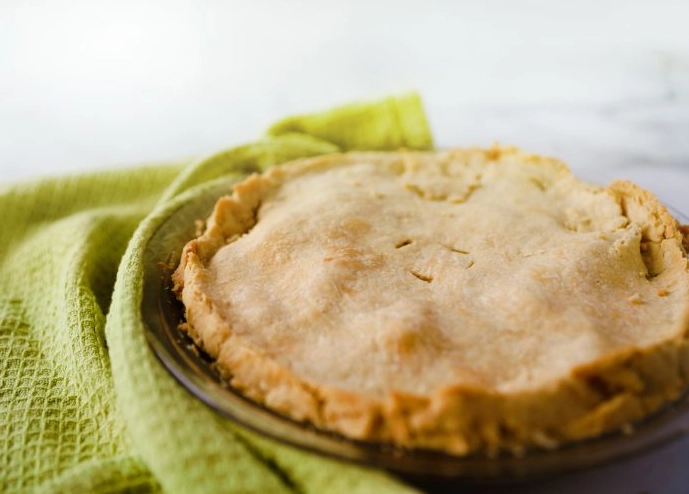
The Foolproof Step-by-Step Process
Here’s where we turn theory into a perfect disk of dough. Read this through once before you start.
1. The Mixing Stage (Keep It Cold)
Whisk your flour and salt in a large bowl. Drop in your frozen butter cubes. Now, use your fingertips, a pastry cutter, or even two forks to break the butter into the flour. Your goal isn't a uniform meal—you want a shaggy mixture with visible butter pieces ranging from pea-sized to almond-sized. Those uneven chunks are your future flakes. This should take about 90 seconds. If your butter starts feeling greasy, stop immediately and pop the bowl in the freezer for 5 minutes.
2. Adding Water (The Critical Moment)
Drizzle in 4 tablespoons of your ice water. Use a fork or a silicone spatula to toss and mix. The dough will look dry and crumbly. Add more water, one tablespoon at a time, tossing after each addition. Stop the moment the dough begins to clump together when pinched. It should look shaggy and not at all smooth. You might use 5 tablespoons, you might use 7. It depends on your flour, the humidity, the phase of the moon—just go by feel.
The #1 Mistake Here: Adding too much water in an attempt to make the dough look "together" in the bowl. A wet dough = a tough, hard crust. It's better to have a few dry crumbs than a wet, cohesive mass at this stage.
3. Forming & Chilling (Patience is a Virtue)
Dump the crumbly mixture onto a clean surface. Use your hands to gather and press it together into a ball. It will come together under pressure. Don't knead it like bread—just press and fold it a couple of times until it holds. Flatten into a 1-inch thick disk, wrap tightly in plastic wrap, and refrigerate for at least 1 hour, ideally 2. This relaxes the gluten, re-chills the butter, and makes rolling infinitely easier. Don't rush this.
3 Common Mistakes That Ruin Your Crust (And How to Fix Them)
I've made these so you don't have to.
Mistake 1: Using Warm Tools or Hands. Your hands are warm. If you handle the dough too much, you melt the butter. Solution: Work quickly, and if you feel the butter softening, pause and chill everything for 10 minutes.
Mistake 2: Overworking the Dough After Adding Water. This develops gluten, leading to a tough, chewy crust that shrinks dramatically. Solution: Mix only until clumps form, then press gently to bring it together. Streaks of butter and flour are good.
Mistake 3: Not Letting It Rest Before Rolling. Trying to roll out a freshly made dough is a fight you will lose. It will be elastic and spring back. Solution: That mandatory chill in the fridge. It makes the dough pliable and cooperative.
Recipes & Variations for Your Dough
This single dough is your blank canvas. Here’s how to adapt it.
The Basic Recipe (for a 9-inch double crust): 2 1/2 cups (315g) all-purpose flour, 1 cup (226g) unsalted butter (frozen), 1 tsp salt, 6-8 tbsp ice water.
For a Sweet Crust: Add 1-2 tablespoons of granulated sugar to the dry ingredients. Perfect for fruit pies or custard pies.
For a Savory Crust (Quiche, Pot Pie): Add a hefty pinch of black pepper and a teaspoon of dried herbs (like thyme or rosemary) to the flour.
For a Galette (Free-Form Tart): Use the basic recipe. Roll into a rustic circle, fill the center, and fold the edges over. The casual style is forgiving and gorgeous.
Baking times vary by filling, but for a pre-baked (blind-baked) shell for a custard pie, bake at 375°F (190°C) with weights for 15 minutes, then without for 10-12 until golden.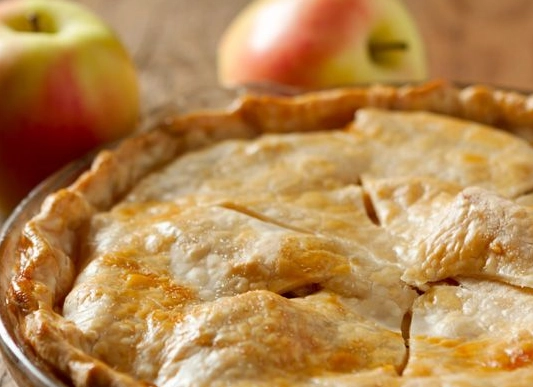
Leave a Comment