Let's be honest. A lot of pie crust recipes out there are liars. They promise flaky perfection but deliver a tough, crumbly, or downright soggy mess. I've been there, staring at a pile of buttery crumbs that refused to become a cohesive dough. After a decade of baking (and failing), I've nailed down a method that works every single time. It's not about magic; it's about understanding a few non-negotiable rules of pastry science. This guide will give you more than just a recipe—it'll give you the confidence to make a tender, flaky, golden crust that's the star of any pie.
What's Inside This Guide
The Real Science Behind Flakiness (It's Not Just Cold Butter)
Everyone says "keep everything cold." That's true, but it's only half the story. Flakiness happens when solid pieces of fat (butter, shortening, or lard) are layered between sheets of flour-water dough. In the oven's heat, the fat melts, creating steam. This steam pushes the flour layers apart, creating those coveted, delicate flakes. If the fat melts before baking—because your kitchen is too warm or you overworked the dough with warm hands—those layers fuse together. You get a tough, dense crust, not a flaky one.
Here's the subtle mistake most beginners make: they focus only on the fat's temperature and ignore the size of the fat pieces. Pea-sized isn't just a casual suggestion. If your butter chunks are too small (like breadcrumbs), you'll get a more shortbread-like, tender crust—good for some tarts, but not the classic flaky American pie crust. If they're too big (walnut-sized), the dough becomes unstable and hard to roll. Pea-sized is the sweet spot for ideal layering.
My Personal Rule: I chill my flour for 30 minutes before I start. It sounds extra, but on a warm day, it's the difference between success and a sticky, frustrating dough. I keep a bag of flour in the freezer just for pastry.
Ingredient Breakdown: Why Each One Matters
You can't swap these willy-nilly and expect the same result. Each plays a specific role.
Flour: The Foundation
Use all-purpose flour. Not bread flour (too much gluten, tough crust), not cake flour (too little structure). The protein content in all-purpose (around 10-12%) gives you enough strength to hold the pie together without becoming chewy. For a slightly more tender crust, you can replace 2-3 tablespoons of the AP flour with pastry flour, but it's not necessary.
Fat: The Flake Maker
This is where opinions clash. I use a butter and shortening blend. Why? Butter gives incredible flavor and color, but it has a lower melting point and contains water, which can sometimes lead to less consistent flakiness. Vegetable shortening has a higher melting point, creating taller, more reliable flakes, but it tastes like nothing. Together, they're the dream team. Lard is another fantastic, traditional option for supreme flakiness and a slight savory note.
| Fat | Flakiness | Flavor | Best For |
|---|---|---|---|
| Unsalted Butter | Good | Excellent, rich | Fruit pies where flavor is key |
| Vegetable Shortening | Excellent, consistent | Neutral | Custard or cream pies where structure is paramount |
| Lard | Superb, ultra-flaky | Rich, slightly savory | Savory pies, traditional recipes |
| Butter/Shortening Blend | Excellent | Great (butter carries it) | The all-purpose, foolproof champion |
Liquid: The Binder
Ice-cold water. Often, a tablespoon of vodka or vinegar is added. The acid inhibits gluten development slightly, promoting tenderness. The alcohol (which evaporates) adds liquid without forming more gluten. It's a professional baker's trick that really works. If you don't have vodka, all water is fine—just be extra gentle.
Salt & Sugar: The Flavor Enhancers
Salt is essential. It balances flavors and strengthens gluten slightly. Don't skip it. A little sugar (1-2 teaspoons) isn't just for sweet pies; it promotes browning and adds a subtle depth that even savory pie crusts benefit from.
The Step-by-Step Process: A Visual Journey
Here's my go-to recipe for a double crust 9-inch pie. Read through once before you start.
Ingredients:
- 2 ½ cups (315g) all-purpose flour, chilled
- 1 teaspoon salt
- 1 teaspoon granulated sugar (optional, but recommended)
- ½ cup (115g) cold unsalted butter, cubed
- ½ cup (95g) cold vegetable shortening, cubed
- 6-8 tablespoons ice-cold water (or 4 tbsp water + 2 tbsp vodka)
1. Combine Dry Ingredients
Whisk the flour, salt, and sugar in a large bowl. I do this right in the bowl I'll mix in. No need for a food processor unless you really struggle with keeping things cold (the processor blade can heat things up fast).
2. Cut in the Fat
Scatter the cold butter and shortening cubes over the flour. Using a pastry blender or your fingertips, quickly work the fat into the flour. Your goal is a coarse mixture with most pieces the size of large peas, with a few smaller and a few slightly larger bits. This variety creates a complex, flaky texture. This should take 60-90 seconds. If the fat starts feeling greasy, stop and pop the bowl in the freezer for 5 minutes.
3. Add the Liquid—The Critical Moment
Sprinkle 5 tablespoons of the ice-cold liquid over the mixture. Using a rubber spatula or fork, gently toss and stir. The dough will look shaggy and dry. Add more liquid, one tablespoon at a time, tossing after each addition. Stop when the dough just begins to clump together when pinched. You may not need all 8 tablespoons. The biggest mistake here is adding too much water, which activates excess gluten and leads to a tough crust.
4. Shape and Chill (Twice!)
Dump the clumpy dough onto a clean surface. Gently gather and press it into two flat discs. Don't knead it like bread—just press it together. Wrap each disc tightly in plastic wrap and refrigerate for at least 1 hour, preferably 2. This relaxes the gluten and re-solidifies the fat. This step is non-negotiable for easy rolling.
5. Roll, Fit, and Chill Again
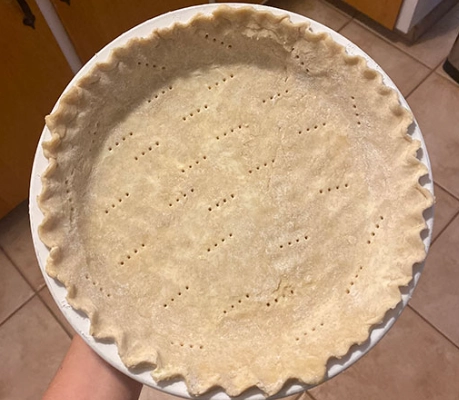
On a lightly floured surface, roll one disc into a 12-inch circle. Transfer it to your pie plate. Don't stretch the dough; let it slump in. Trim the overhang. If making a filled pie (like apple), add your filling now. Roll out the top crust, place it over the filling, and crimp the edges. Put the assembled, unbaked pie back in the fridge for 30 minutes before baking. This final chill is the secret weapon against shrinkage and slump.
6. Bake to Perfection
Always bake your pie on the lower third rack of a preheated oven. For a fruit pie, start at a high temperature (425°F/220°C) for 15-20 minutes to set the crust, then reduce to 375°F/190°C to finish cooking the filling without burning the crust. For a pre-baked (blind-baked) shell for custard pies, use pie weights and bake at 375°F/190°C until set.
The 3 Most Common Pitfalls & How to Avoid Them
I've made these mistakes so you don't have to.
1. The Soggy Bottom: This is the classic enemy. Solutions: Use a glass or dull metal pie plate (they conduct heat better than shiny metal). Pre-bake (blind bake) the bottom crust for wet fillings like pumpkin. Sprinkle a thin layer of breadcrumbs or ground nuts on the bottom crust before adding a juicy fruit filling—they act as a sponge.
2. Crust Shrinkage: The dough pulls away from the sides during baking. Cause: The gluten is too tense. Fix: Don't stretch the dough when fitting it into the pan. Let it relax in the fridge longer (that second chill is key). Handle the edges as little as possible when crimping.
3. Tough, Not Tender: You overworked the dough, either by cutting the fat too finely, adding too much water, or kneading it. Treat the dough like it's fragile. A few dry spots are better than a homogenous, over-hydrated mass.
Leave a Comment