You've seen the pictures. You've maybe even had a few decent ones from a bakery. But when you try to make macarons at home, it's a different story. Hollow shells. Cracked tops. No feet. Sticky bottoms. I've been there. I've thrown away more trays of failed macarons than I care to admit. The internet is full of advice, but most of it misses the point. They tell you to age your egg whites, sift your almond flour five times, buy an oven thermometer. Those things help, but they're not the secret.
The real secret isn't a single ingredient or tool. It's understanding and controlling the three non-negotiable physical transformations that your batter must go through between the mixing bowl and the cooling rack. Get these right, and you can make great macarons with a basic kitchen scale and a hand mixer. Miss one, and no amount of aged egg whites will save you.
What You'll Learn in This Guide
Phase One: The Meringue – It's Not About Stiff Peaks
Everyone obsesses over stiff peaks. I did too. But here's the thing: a meringue can have beautiful, firm peaks and still be a terrible foundation for macarons. The goal isn't stiffness; it's stability and density.
French meringue (adding sugar to egg whites) is common, but it's the most temperamental. Italian meringue (adding hot sugar syrup) is more stable, and Swiss (heating whites and sugar together) is a good middle ground. I prefer Swiss for home bakers. It's forgiving.
Pro Tip Most Blogs Skip: The sugar isn't just for sweetness. When you heat it with the egg whites (Swiss method) or cook it into a syrup (Italian method), you're partially denaturing the proteins and creating a more robust, heat-stable foam. This is your first defense against collapsing in the oven.
Your meringue should look glossy and thick, like shaving cream or marshmallow fluff. When you lift the whisk, the peak should stand straight up but the very tip should fold over on itself just slightly—this is called a "bird's beak" or firm peak. If it's so stiff it's clumpy and grainy, you've gone too far. That meringue will be impossible to fold smoothly.
The Humidity Factor in Your Meringue
On a rainy day, your egg whites can absorb moisture from the air, making them harder to whip to full volume. A tiny pinch of cream of tartar or a few drops of lemon juice helps stabilize the protein structure, counteracting this. It's a small step with a big impact on consistency.
Phase Two: Macaronage – The "Figure-Eight" Test is a Trap
This is where most tutorials give dangerously vague advice. "Fold until it flows like lava" or "until you can draw a figure eight." I hate the figure-eight test. Why? Because by the time you can draw a perfect, unbreaking figure eight, you are almost certainly seconds away from overmixing.
Macaronage is the process of deflating your perfect meringue just enough to combine it with the almond flour-sugar mixture. You're aiming for a specific viscosity. Think of it like cake batter, but thicker. Here's a better test:
The "Ribbon and Sink" Test: Scoop up some batter with your spatula and let it fall back into the bowl. It should fall in a wide, continuous ribbon. Now, stop. Watch the batter that just landed on the surface. It should sink back into the mass and disappear within 10-15 seconds, not instantly, and not after 30 seconds. If it sits there like a blob, it's undermixed. If it vanishes immediately, it's overmixed and will spread into puddles on your tray.
Common Mistake: People see a few tiny lumps and keep folding to eliminate them. Stop. A few tiny almond bits are far less damaging than a runny, overworked batter. You can tap the tray later to settle them. Overmixing is the primary cause of flat, spread-out macarons with no feet.
Phase Three: Resting & Drying – The Silent Game-Changer
This is the closest thing to a true "secret" that most home bakers ignore. After you pipe your macarons, you must let them sit before baking. This forms a skin on the surface.
Why is this skin so critical? When the macarons heat up in the oven, the air and moisture inside the batter expand. The skin acts like the top of a hot air balloon. It's strong enough to contain that pressure, forcing the expanding gases to push downwards and outwards at the bottom, creating the iconic "feet." No skin? The top is the weakest point, so it cracks open like a muffin top, and the gases escape upwards. Feet fail to form, or they're jagged and uneven.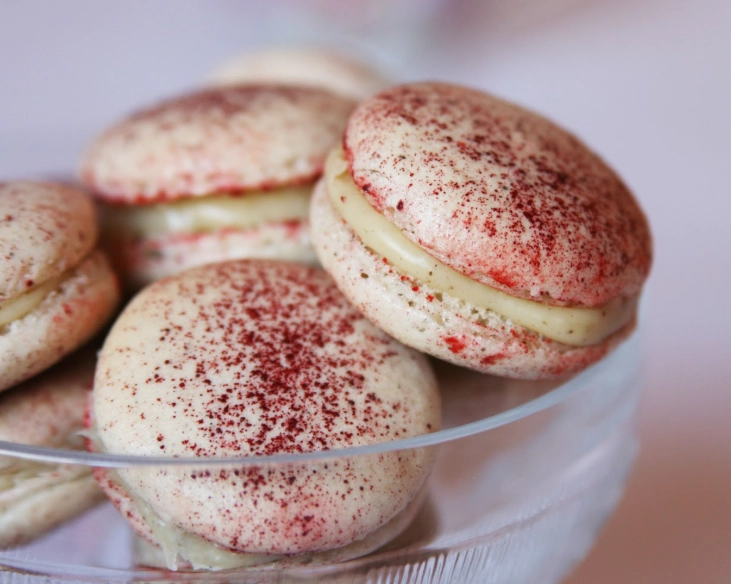
Resting time is not fixed. It depends entirely on your kitchen's humidity.
- Dry climate (under 40% humidity): 15-25 minutes. Touch the top lightly. It should not stick to your finger.
- Average humidity (40-60%): 30-45 minutes.
- Humid day (over 60%): 60 minutes or more. You might even need to point a fan at them (not directly, just to circulate air).
I've waited over 90 minutes on a muggy summer day. Patience here is non-negotiable.
Your Baking Environment: The Invisible Ingredient
Your oven and your room's atmosphere are part of the recipe. You can't control them with a measuring cup, but you must adapt.
Ovens Lie. Every single one. An oven thermometer is essential because the displayed temperature is often wrong. But more importantly, you need to understand your oven's heat distribution. Conventional ovens have hot spots. Convection/fan ovens circulate air, which can help with even rising but can also blow delicate skins and cause lopsided feet.
My method? I start with a high initial temperature (150°C/300°F) for 4-5 minutes to force the feet out quickly. Then I immediately reduce the heat (to 135°C/275°F) for the remaining 10-12 minutes to bake the insides gently without browning the shells. I also double-stack my baking sheets (one tray inside another) to insulate the bottoms and prevent burning.
Humidity is the arch-nemesis. If it's raining, your resting time will be long, and your shells might still be tacky. Some professional bakers use dehumidifiers. At home, just avoid making macarons on the most humid days if you can. Or, plan for a much longer rest. The French Pastry School's resources often discuss how professional kitchens manage environmental variables, which is a huge part of their consistency.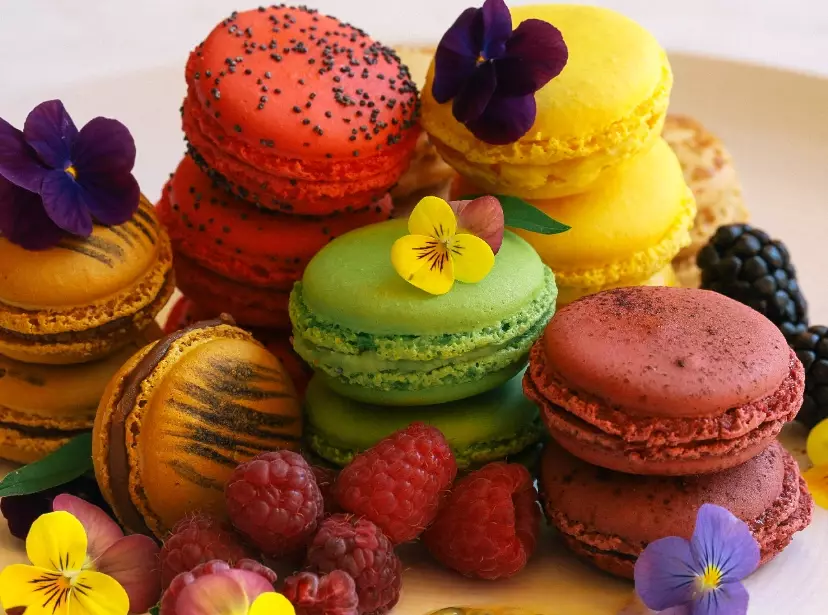
Your Macaron Problems, Solved
So, what's the secret? It's abandoning the search for a single magic bullet. It's respecting the process: building a stable meringue, mixing to the precise moment the batter yields, and giving it the time it needs to form that crucial skin. Control your environment as best you can. Don't get discouraged by a failed batch—each one teaches you something about your kitchen, your ingredients, and your technique. Now go preheat your oven. And maybe check the weather forecast first.
Leave a Comment