Jump to What Matters
- Why Do Most Beginner Bakers Fail? (And How to Avoid It)
- The Non-Negotiable Tools for Easy Baking
- The Pantry Staples: Your Baking Foundation
- 5 Foolproof Easy Baking Recipes to Build Your Confidence
- Let's Break Down a Recipe: The Ultimate Easy Chocolate Cake
- Answering Your Baking Questions (The Stuff You Actually Google)
- Taking Your Easy Baking to the Next Level
- Parting Thoughts: Keep It Simple, Really
Let's be honest. The internet is flooded with baking content. Fancy drip cakes, intricate pastries that look like they belong in a Parisian window. It's enough to make anyone think baking is some secret club you need a degree to join. I felt that way too, standing in my kitchen years ago, staring at a recipe that called for "folding" and "tempering" like it was a chemistry exam.
It's nonsense. Baking, at its heart, is just following instructions. The real trick is finding the right instructions—the ones that don't assume you own a stand mixer or know what "ribbon stage" means. That's what easy baking recipes are all about. Recipes that work, consistently, without the drama.
This isn't about cutting corners on flavor. It's about cutting out the intimidation. We're going to talk about recipes that have short ingredient lists, clear steps, and a huge margin for error. The kind of stuff you can whip up on a Wednesday evening because you want a cookie, not a project.
Why Do Most Beginner Bakers Fail? (And How to Avoid It)
Failure in baking usually comes down to a few simple, fixable things. It's rarely because you're "bad at it."
First up: recipe choice. Picking a complicated French macaron recipe as your first bake is like trying to run a marathon without training. You're setting yourself up for frustration. The single best thing you can do is seek out recipes specifically labeled as easy, simple, or beginner-friendly. These recipes are tested to be forgiving.
Second, not reading the recipe all the way through. I'm guilty of this even now. You get excited, start mixing, and get to step 4 only to see "chill dough for 4 hours." Too late. Always read the whole thing first.
The third big one is measurement. Baking is more precise than cooking. "A cup of flour" isn't just a cup of flour if you scoop it straight from the bag—you'll pack in way too much. The best method is to spoon flour into your measuring cup and level it off. For real accuracy, a cheap digital kitchen scale is a game-changer. It removes all the guesswork and is why many easy baking recipes in Europe list ingredients by weight (grams). It's simply more reliable.
The Non-Negotiable Tools for Easy Baking
You don't need a kitchen full of gadgets. Seriously. A few basics will get you 95% of the way there.
Mixing Bowls: Get a set of nested glass or stainless steel bowls. One big, one medium, one small.
Measuring Cups and Spoons: Have two sets. One for dry ingredients, one for wet (like oils and honey). It saves time and mess.
A Whisk and a Spatula: A balloon whisk for combining dry stuff and beating eggs. A good silicone spatula for scraping every last bit of batter out of the bowl—this matters more than you think.
Baking Pans: Start with a simple half-sheet pan (a rimmed baking sheet) and a standard 9-inch round or square cake pan. Lining them with parchment paper is the ultimate hack for easy cleanup and guaranteed non-stick results.
That's really the core. A hand mixer is nice for things like whipping cream or beating butter and sugar, but for many simple baking recipes, a strong arm and a whisk will do. Don't let lack of equipment stop you.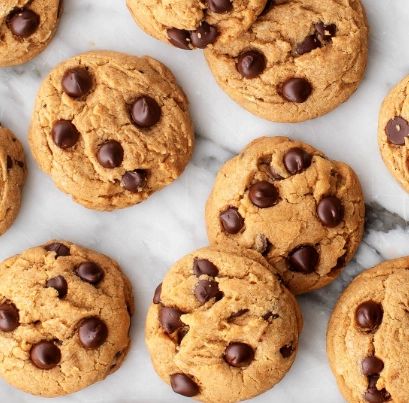
The Pantry Staples: Your Baking Foundation
Keeping a few key ingredients on hand means you can bake on a whim. Here's what you should always have:
- All-Purpose Flour: The workhorse. Don't buy the giant bag unless you bake weekly; flour can attract pantry bugs over time.
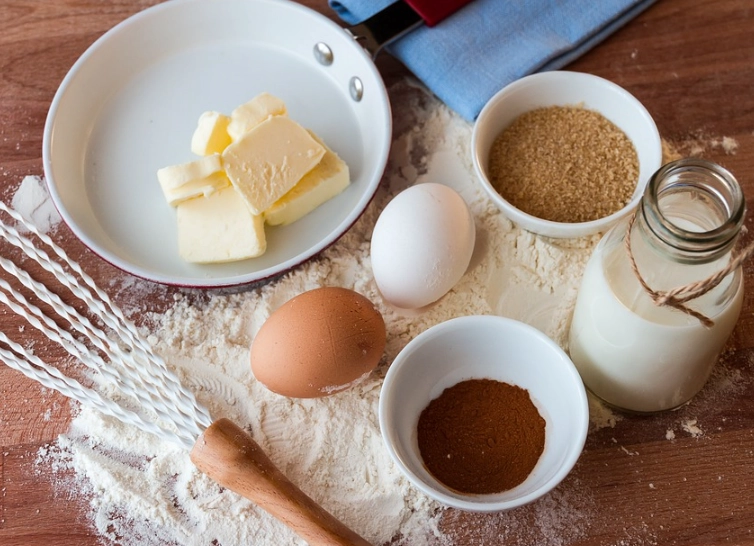
- Granulated Sugar & Light Brown Sugar: White sugar for sweetness and structure. Brown sugar (keep it soft in an airtight container with a piece of bread) adds moisture and a caramel hint.
- Baking Powder & Baking Soda: They are NOT interchangeable. Baking powder is for recipes without acidic ingredients. Baking soda needs an acid (like yogurt, buttermilk, lemon juice) to work. Check your dates—they lose potency after 6 months.
- Salt: Kosher salt or fine sea salt. It's a flavor enhancer, not just for savory things. It makes chocolate taste more chocolatey.
- Pure Vanilla Extract: Skip the artificial stuff. It's expensive but you use so little. The flavor difference is massive.
- Eggs & Unsalted Butter: Eggs should be large, and recipes assume they're at room temperature for better incorporation (take them out an hour before). Unsalted butter lets you control the salt level in your bake.
With just these basics, you can make a shocking number of baking recipes easy and delicious.
5 Foolproof Easy Baking Recipes to Build Your Confidence
Let's get practical. Here are five categories of bakes that are famously forgiving and incredibly satisfying. I've included a classic example for each.
1. The One-Bowl Wonder: Simple Banana Bread
This is the ultimate beginner's bake. Overripe bananas? Don't throw them out. This recipe is forgiving, moist, and mixes in one bowl. You can add chocolate chips, nuts, or nothing at all. The key is mashing the bananas well. No mixer needed.
2. The No-Chill Cookie: Basic Chocolate Chip Cookies
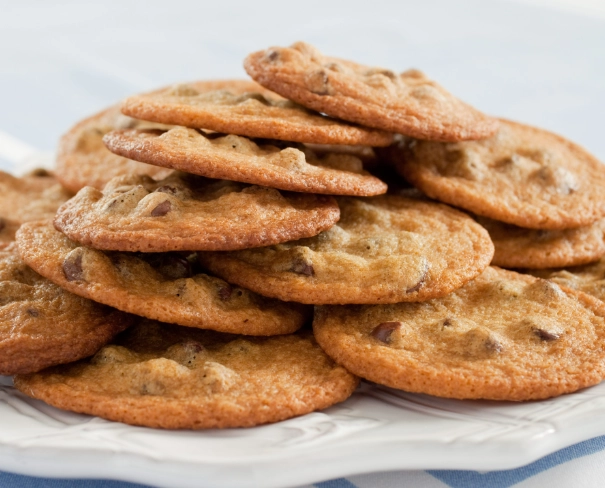
Many cookie doughs need chilling, which requires planning. This version uses melted butter, so you can mix and bake immediately. The cookies will be thinner and chewier with crispy edges—a crowd-pleaser every time. It's a perfect example of an easy baking recipe for beginners that delivers classic results.
3. The "Impress Your Friends" Bake: No-Knead Bread
Yes, you can bake bread. This method, popularized by Jim Lahey, uses time instead of muscle. Mix flour, water, yeast, and salt. Let it sit for 12-18 hours. Shape it loosely, bake it in a preheated Dutch oven. The steam creates a crackly, professional crust. It requires almost no active effort but looks and tastes artisan.
4. The 5-Minute Prep: Yogurt Muffins
Muffins are just cupcakes without the pressure to be pretty. A basic yogurt muffin batter (flour, sugar, yogurt, oil, egg, baking powder) is a blank canvas. Throw in frozen berries, lemon zest, or diced apples. Mix until *just* combined—a few lumps are fine. Overmixing makes them tough. Bake for 20 minutes. Breakfast is served.
5. The No-Bake Savior: Chocolate Oat Bars
When it's hot or you just can't turn on the oven. Melt butter, sugar, and cocoa. Stir in oats and maybe some peanut butter. Press into a pan and chill. It's more like candy-making than baking, but it satisfies the sweet tooth instantly and is a great project with kids.
See? None of that sounds scary. They're all built on simple techniques.
Let's Break Down a Recipe: The Ultimate Easy Chocolate Cake
To show you how a good simple baking recipe works, let's look at a classic "dump cake"—where you basically mix dry and wet ingredients separately, then combine. This cake is famously moist and reliable.
| Ingredient | Quantity | Purpose & Note |
|---|---|---|
| All-purpose flour | 2 cups | The structure. Spoon and level it! |
| Granulated sugar | 2 cups | Sweetness, and also helps keep the cake tender. |
| Unsweetened cocoa powder | 3/4 cup | Use natural cocoa, not Dutch-process, for this recipe. |
| Baking powder | 2 tsp | Lift. Make sure it's fresh. |
| Baking soda | 1.5 tsp | React with the acidic buttermilk for rise. |
| Salt | 1 tsp | Balances the sweetness. Don't skip. |
| Eggs | 2 large | Room temperature. They bind everything. |
| Buttermilk | 1 cup | The acid for the baking soda, plus incredible moisture. No buttermilk? Mix 1 cup milk with 1 tbsp vinegar, wait 5 mins. |
| Vegetable oil | 1/2 cup | Oil makes a moister cake than butter. Use a neutral one like canola. |
| Hot coffee | 1 cup | This is the secret. It intensifies the chocolate flavor. You won't taste coffee. |
| Vanilla extract | 2 tsp | The flavor backbone. |
The method?
Sift all the dry ingredients (flour, sugar, cocoa, baking powder/soda, salt) right into a big bowl. Whisk them together. This is crucial for even distribution. In another bowl, whisk the eggs, buttermilk, oil, and vanilla. Now, pour the wet stuff into the dry stuff. Whisk until it's mostly combined. Slowly pour in the hot coffee. The batter will be very thin—that's correct. Don't panic.
Pour into two greased and lined 9-inch pans. Bake at 350°F (175°C) for 30-35 minutes. The cake is done when a toothpick inserted in the center comes out with a few moist crumbs, not wet batter.
This recipe works because each ingredient has a clear job, and the method is streamlined. It's a masterclass in baking recipes easy enough for a Tuesday but special enough for a birthday.
Answering Your Baking Questions (The Stuff You Actually Google)
These are the real-world hiccups. Everyone faces them.
Taking Your Easy Baking to the Next Level
Once you've nailed a few basics, you can start playing. This is where baking gets fun.
Flavor Twists: Add a pinch of espresso powder to chocolate recipes. Infuse your milk or cream with herbs like lavender or rosemary for shortbread. Add citrus zest (lemon, orange) to sugar cookies or muffin batter.
Texture Play: Toast nuts before adding them to batter. It deepens their flavor immensely. Use coarse sugar on top of muffins before baking for a crunchy finish.
The goal isn't complexity. It's depth. A simple scone becomes extraordinary with good quality jam and clotted cream. A basic shortbread is elevated by using European-style butter with a higher fat content.
For reliable, science-backed information on ingredients and food safety, I often refer to resources from the U.S. Department of Agriculture (USDA) for general food facts. For very specific baking science, the resources from King Arthur Baking Company's learning section are incredibly detailed and trustworthy—they've been at this for over 200 years.
Parting Thoughts: Keep It Simple, Really
The biggest lesson I've learned is that the best bakes are often the simplest. A perfectly golden, slightly crisp-on-the-outside, soft-on-the-inside chocolate chip cookie beats a fussy, five-layer cake any day in my book. At least for everyday life.
Don't get bogged down in the Instagram perfection. Your banana bread can have a crack down the middle. Your muffins can be lopsided. If it tastes good, you've won.
The path to becoming a confident baker is paved with easy baking recipes.
Start with one. Read it thoroughly. Measure carefully. And then just go for it. The worst that can happen is you learn something for next time. More often than not, you'll end up with something delicious to share. And that's the whole point, isn't it?
Leave a Comment