Let's cut to the chase. Great puff pastry dough isn't magic. It's a simple, almost meditative process of folding cold butter into a simple dough. The result? Hundreds of paper-thin, shatteringly crisp layers that make everything from a morning croissant to an elegant vol-au-vent feel like a special occasion. Most guides overcomplicate it. I've been teaching pastry for over a decade, and the biggest mistake I see isn't in the folding—it's in the mindset and a few critical temperature details everyone glosses over.
Your Quick Guide to Flaky Success
- What Exactly is Puff Pastry Dough?
- The 5 Core Ingredients & Why Each One Matters
- The Step-by-Step Process: From Mixing to Baking
- Mastering the Fold: Single vs. Double Turns Explained
- Classic vs. Quick vs. Inverse: Which Puff Pastry is Right for You?
- Pro Baking Tips for Maximum Rise and Flake
- Your Puff Pastry Problems, Solved (FAQ)
What Exactly is Puff Pastry Dough?
At its heart, puff pastry is a laminated dough. That's a fancy term for layering. You create a basic dough (the détrempe) and envelop a slab of cold butter (the beurrage). Through a series of rolls and folds, you create hundreds of alternating layers of dough and butter. In the oven, the water in the butter and dough turns to steam, pushing the layers apart. The butter fries the dough from within, creating that iconic, crisp separation.
The Non-Consensus Bit: Many recipes treat the dough and butter as separate entities. The real secret? Their consistency should be nearly identical—cold but pliable, like modeling clay—when you start laminating. If the butter is rock-hard and the dough is soft, you'll tear the layers. If both are too soft, the butter will ooze out. Matching their textures is the first, rarely mentioned, step to success.
The 5 Core Ingredients & Why Each One Matters
You only need a handful of things. But the type and temperature of each are non-negotiable.
1. Flour
All-purpose flour is your friend. It has enough protein (around 10-12%) to give the dough structure without making it tough like bread flour would. Some professional bakers, like those whose techniques are archived by the King Arthur Baking Company, might blend in a small percentage of cake flour for extra tenderness, but it's not essential for beginners.
2. Butter
This is the star. Use a high-fat, European-style butter (82-84% fat). The higher fat content means less water, which translates to better, more distinct layers and richer flavor. Store-brand butter with more water will steam more aggressively and can cause leaks. Keep it cold. I mean, really cold until you need to pound it.
3. Water
Ice water. Always. The goal is to keep everything chilled. Some recipes add an acid—vinegar or lemon juice. This isn't for flavor. A tablespoon of acid slightly inhibits gluten development, keeping the dough more tender and less elastic, which makes rolling easier.
4. Salt
Fine sea salt. It balances the flavor. Without it, your pastry will taste flat, no matter how much butter you use.
Here’s a visual on the ideal ratios for a classic batch:
| Ingredient | Weight (grams) | Key Purpose & Tip |
|---|---|---|
| All-Purpose Flour | 500g | Structure. Weigh it for accuracy. |
| Cold Water | 240ml | Hydration. Keep it icy. |
| Unsalted Butter (for block) | 375g | Lamination. Use high-fat, European-style. |
| Fine Sea Salt | 10g | Flavor. Don't skip. |
| White Vinegar/Lemon Juice | 15ml | Tenderizer. The secret helper. |
The Step-by-Step Process: From Mixing to Baking
Imagine you're about to start. The kitchen is cool. You have time. Rushing is the enemy.
Step 1: Make the Dough (Détrempe)
Mix the flour and salt. Add the ice water and acid all at once. Stir just until a shaggy mass forms. Don't knead it smooth—you want minimal gluten development at this stage. Pat it into a rough rectangle, wrap it tightly, and refrigerate for at least 1 hour, preferably 2. It needs to be thoroughly chilled, not just cold on the surface.
Step 2: Prepare the Butter Block (Beurrage)
Take your cold butter. Slice it into tablespoons and arrange them on a piece of parchment paper to form a rough 6x7 inch rectangle. Cover with another parchment sheet and pound it with a rolling pin. You're not attacking it; you're persuading it into a flat, even slab that's pliable but still cold. If it gets greasy or soft, stop and chill it immediately. This slab should be the same consistency as your rested dough.
Step 3: The Encase and First Fold
On a lightly floured surface, roll your chilled dough into a rectangle about twice as wide as your butter slab and 1.5 times as long. Place the butter slab in the center. Fold the dough flaps over the butter like you're wrapping a present, sealing the edges completely. This is the encasement. Give it a gentle roll to seal the seams. Now, roll it into a long rectangle, about 20x10 inches. Brush off any excess flour.
Mastering the Fold: Single vs. Double Turns Explained
This is where the layers are born. A "turn" means folding the dough and rolling it out again.
- Single Turn (Book Fold): Fold the bottom third of the rectangle up, then the top third down over it, like folding a business letter. This gives you 3 layers.
- Double Turn (Wallet Fold): Fold both ends in so they meet at the center, then fold the dough in half at that center line (like closing a book). This gives you 4 layers.
After each turn, wrap the dough and chill it for 30-45 minutes. This relaxes the gluten and re-chills the butter, preventing tear-out. The classic sequence for maximum layers is: 1 double turn, then 2 single turns. That's it. You now have hundreds of theoretical layers.
My Personal Routine: I always mark the dough with a finger indent to track turns. One indent after the first turn, two after the second. It prevents the "did I already do a turn?" panic mid-process. Also, if the dough starts fighting back and shrinking as you roll, it's telling you it needs more rest. Listen to it.
Classic vs. Quick vs. Inverse: Which Puff Pastry is Right for You?
Not all laminated doughs are the same. Here’s how they stack up for different uses.
| Type | Method | Best For | Effort Level |
|---|---|---|---|
| Classic Puff Pastry | Dough encases butter. 6 turns total. | Croissants, Palmiers, show-stopping vol-au-vents. Maximum rise and flake. | High (Time & Patience) |
| Quick Puff (Rough Puff) | Butter is diced into flour, then folded. 4 turns. | Savory pies, sausage rolls, quick turnovers. Great flavor, slightly less uniform rise. | Medium |
| Inverse Puff Pastry | Butter encases dough. Professional technique. | Very stable, ideal for intricate shapes and warm kitchens. Less likely to shrink. | Expert |
Pro Baking Tips for Maximum Rise and Flake
You've made it through the folds. Don't ruin it in the oven.
Temperature is Key: A very hot oven (400°F / 200°C) is crucial. The intense heat turns the water to steam rapidly, pushing the layers up before the structure sets.
Steam Helps: Throw a few ice cubes on the oven floor in the first 5 minutes. The extra steam boosts the lift.
Chill Before Cutting: Always chill your shaped pastries for 20-30 minutes before baking. This firms the butter, giving you cleaner cuts and more vertical rise.
Egg Wash Wisely: For shine, use a whole egg wash. For maximum browning without much shine, use just the yolk. Avoid getting egg wash on the cut sides, as it can glue layers together.
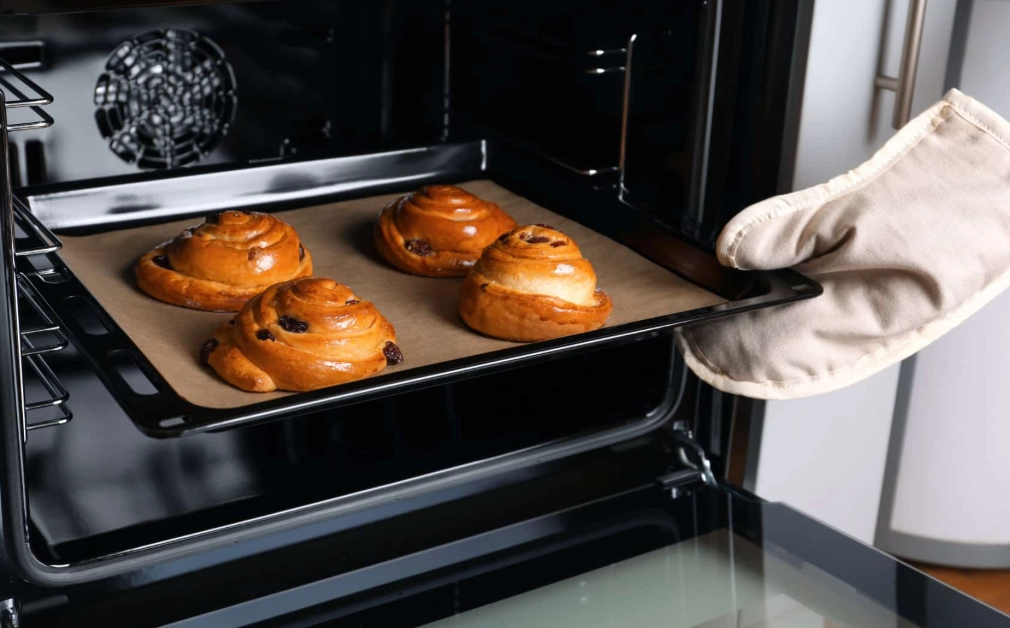
I learned the hard way that baking on a dark sheet pan vs. a light-colored one can affect browning. Dark pans absorb more heat and can cause the bottoms to burn before the pastry is fully puffed. Use a light-colored, heavy-gauge pan or double-pan your baking sheet.
Leave a Comment