If you bake sourdough, measure coffee beans, or track macros, a precise kitchen scale isn't a luxury—it's a necessity. But "accuracy" is a word thrown around loosely in product listings. I've tested dozens of scales over the years, from cheap drugstore finds to lab-grade equipment, and I can tell you that the difference between "good enough" and "truly accurate" often ruins recipes or undermines your diet. This guide isn't about listing popular models. It's about teaching you how to spot a genuinely accurate scale by looking past the marketing and understanding the engineering.
What's Inside This Guide
What Does "Accuracy" Really Mean for a Kitchen Scale?
Most people think accuracy is just about small increments. If it measures in 0.1-gram increments, it must be accurate, right? Not necessarily. That's just the readability or resolution.
True accuracy is about how close the displayed weight is to the actual, true weight of the object. A scale can show 10.0 grams but actually be holding 10.5 grams. That's a 5% error—catastrophic in baking.
Manufacturers define accuracy with an internal standard, often referencing guidelines from bodies like the National Institute of Standards and Technology (NIST). The key spec to look for is something like "±0.1%" or "±0.5g". This is the tolerance. A scale with ±0.5g accuracy means at 100 grams, the real weight could be between 99.5g and 100.5g. For a 500-gram bread dough, that same scale's potential error is still ±0.5g, which is excellent.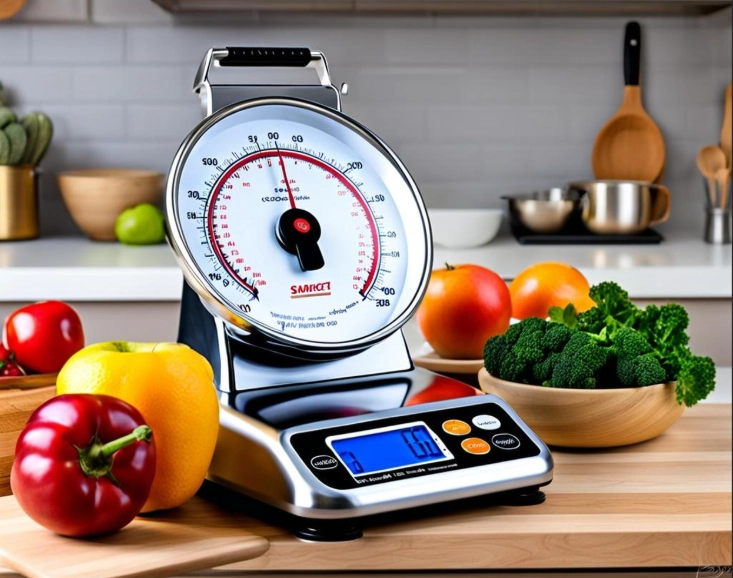
The Big Misconception: A scale that measures in 0.01g increments is not inherently more "accurate" than one that measures in 0.1g. It's more precise (sensitive to tiny changes), but if it's not calibrated correctly, its 0.01g reading could be wildly off. I've seen 0.01g scales drift by a full gram after a week. Precision without accuracy is useless.
What Actually Affects a Scale's Accuracy?
Three core things determine if your scale stays accurate over time.
1. The Sensor Type: Strain Gauge vs. Electromagnetic Force Restoration
Almost all consumer digital scales use strain gauge load cells. A small metal beam bends under weight, and sensors measure the bend. They're affordable and good, but susceptible to temperature changes, physical shock, and "creep" (readings drifting over time while holding a constant weight).
High-end and scientific scales often use Electromagnetic Force Restoration (EMFR) technology. It uses an electromagnet to counterbalance the weight. It's far less affected by environment and offers superior long-term stability. If you see a kitchen scale over $150, it might be EMFR. It's the gold standard.
2. Calibration: Internal vs. External
Calibration aligns the scale's reading with a known standard. Internal calibration uses a built-in weight. The scale can self-calibrate, often on startup or with a button press. It's convenient but depends on that internal weight never changing.
External calibration requires you to place a known calibration weight (like a 100g or 500g weight) on the platform. It's a slight hassle, but it's more reliable because you're using a traceable standard. Many pro bakers prefer this.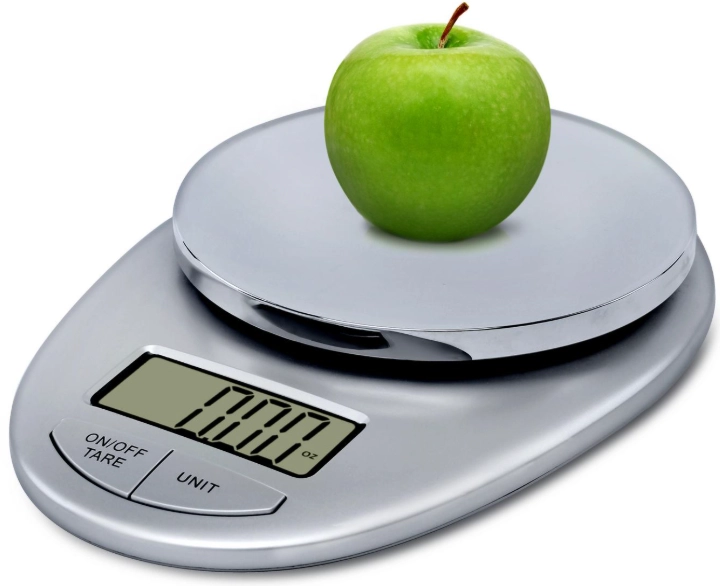
3. Environment & Usage
Your kitchen is a hostile place for precision. Drafts from vents or open windows, an uneven countertop, temperature fluctuations, and even static electricity can cause momentary fluctuations. The biggest killer? Placing the scale near a stove or oven. Heat directly warps the load cell.
How to Choose the Most Accurate Kitchen Scale for Your Needs
Match the scale's capability to your actual use. Buying a hyper-sensitive 0.01g / 3kg scale for making large batches of jam is overkill and often less stable at high weights.
| Your Primary Use | Recommended Capacity | Critical Accuracy Feature | Sensor Priority |
|---|---|---|---|
| Baking Bread, Large Batches | 5kg - 10kg | Low tolerance (±1g or better) at high weights | Robust strain gauge |
| Pastry, Cake Baking | 3kg - 5kg | Consistency at mid-weights (100g-1000g) | Stable strain gauge or EMFR |
| Coffee, Spices, Sourdough Starter | 500g - 2kg | High resolution (0.1g) & low error at small weights ( | High-quality strain gauge or EMFR |
| Macro/Diet Tracking | 3kg - 5kg | Tare function reliability, easy unit switching | Good strain gauge |
Other non-negotiable features for maintained accuracy:
- Auto-off Timer: A must, but ensure it's long enough (2-3 minutes) so it doesn't shut off while you're slowly pouring flour.
- Stable Platform: Large, non-slip feet. Wobbly feet introduce error.
- Clear Display: You shouldn't have to guess the last digit.
- Power Source: Lithium batteries often provide more stable voltage than alkalines, leading to more consistent readings over the battery's life.
How to Test Your Scale's Accuracy at Home (The Right Way)
Don't just trust the box. Here’s a simple, reliable method using items of known weight.
Step 1: Gather Your Test Weights. The best option is a set of calibration weights (a 50g and 100g weight is a great start). If you don't have those, use untouched, factory-sealed items:
- A new U.S. nickel weighs 5.00 grams. A penny is 2.50g.
- A standard 500ml (16.9 fl oz) bottle of water weighs almost exactly 500 grams + the bottle weight (tare it out).
- An unopened stick of butter is 113g (4 oz).
Step 2: Test at Multiple Points. Accuracy can vary across the scale's range.
- Test at a low weight (e.g., 5g using a nickel).
- Test at a mid-weight (e.g., 100g using calibration weight or water).
- Test at a high weight (e.g., 1kg using two water bottles).
Place the weight gently in the center of the platform. Let the reading stabilize.
Step 3: Check Repeatability. This is huge. Weigh the same object five times in a row, removing it completely between each weigh. The readings should be identical. If they vary by more than the scale's stated tolerance (e.g., ±0.2g), its repeatability is poor—return it.
Step 4: Check Off-Center Loading. Place a weight (like a water bottle) in the center, note the weight. Move it to the front left corner, then the back right. The readings should not change significantly. If they do, the load cell is poorly aligned or the platform is flexing.
Pro Tips & Common Mistakes That Destroy Accuracy
I've seen more baking fails from technique than from bad equipment.
Always let the scale warm up. Turn it on and let it sit for 10-15 seconds with nothing on it. This stabilizes the electronics.
Level your scale. I use a small bubble level. If the platform isn't level, gravity pulls the weight at a slight angle, skewing the measurement. This is the most common silent killer of accuracy people ignore.
Tare your container after it's on the platform. Don't turn on the scale with the bowl already on it. Power on, let it read zero, then place the bowl and press tare.
Don't pour directly over the scale. The force of falling ingredients creates a momentary spike in weight that the sensor can "lock onto." Pour into a bowl held in your hand, then gently place the bowl on the scale.
Avoid drafts and vibrations. Not near the HVAC vent, not on top of the running refrigerator. It seems obvious, but it matters.
Keep it clean and dry. Crumbs under the platform or in the hinge (for foldable scales) can cause massive errors. Never submerge it.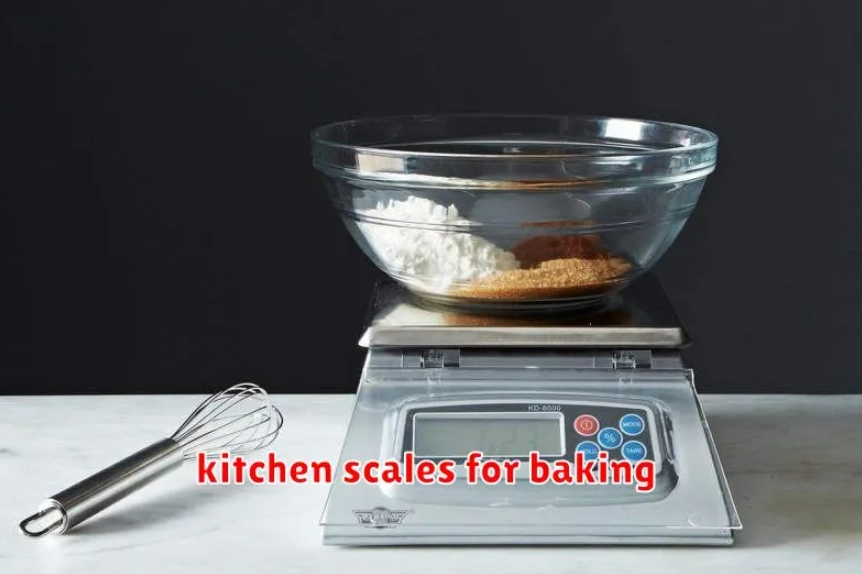
Your Precision Scale Questions, Answered
When measuring sticky ingredients like honey, why does the weight seem to keep increasing even after I stop pouring?
That's likely due to a phenomenon called "creep" in the strain gauge. The viscous ingredient slowly settles and continues to apply force to the sensor in a way it didn't initially. Also, some of it might be dripping from the spoon after you think you're done. For extreme accuracy with viscous liquids, use the "weigh and tare" method: place your jar of honey on the scale, tare to zero, scoop out what you need, and place the jar back. The negative number shown is the amount you removed.
My scale seems accurate with heavy things but is terrible with small amounts like yeast or salt. Why?
You're hitting the scale's minimum effective weight. Every scale has a threshold below which its readings are unreliable. A scale with a 5kg capacity might have a minimum weight of 2-5g. For tiny amounts, you need a scale with a smaller max capacity (like 500g) designed for high resolution at low weights. Don't try to weigh 3 grams of yeast on a scale meant for weighing sacks of flour.
Do I need to calibrate my kitchen scale regularly?
For casual use, maybe once a year or if you move it. For serious baking or coffee, every few months. If you notice it consistently off by the same amount when tested, it's calibration time. An externally calibrated scale gives you more control. For most internal-calibration scales, just press the button if it has one.
 Can I use my kitchen scale to weigh mail packages?
You can, but it's a great way to ruin a good scale. Dropping a heavy, uneven package onto the platform can shock and permanently damage the delicate load cell. The internal mechanism is designed for gently placed bowls, not a 5-pound box slammed down. Buy a separate, rugged postal scale.
Why do two different "accurate" scales give slightly different weights for the same bowl of flour?
First, check that both are leveled and on the same surface. If they are, you're seeing the combined tolerance error of both devices. If Scale A has a ±0.5g error and Scale B has a ±0.5g error, the same object could read up to 1 gram apart and both scales would still be within their specified accuracy. This is why consistency with one trusted scale is more important than chasing absolute perfection.




Leave a Comment