Let's be honest. The words "easy" and "perfect cheesecake" rarely go together in most recipes. You're promised simplicity, then hit with a water bath, finicky temperature controls, and the inevitable heartbreak of a giant crack down the middle. I've been there. My first cheesecake looked like a tectonic plate diagram.
After a decade of testing (and eating), I've nailed a method that ditches the complexity but keeps the dreamy, creamy, crack-free result. This easy perfect cheesecake recipe is built for beginners, forgiving for experts, and uses a clever trick to eliminate the water bath entirely. It's the only one you need to bookmarked.
What's Inside This Guide?
The Non-Negotiable Ingredients for Success
Great cheesecake starts with great ingredients. You can't cut corners here and expect a perfect texture. Let's break down why each component matters.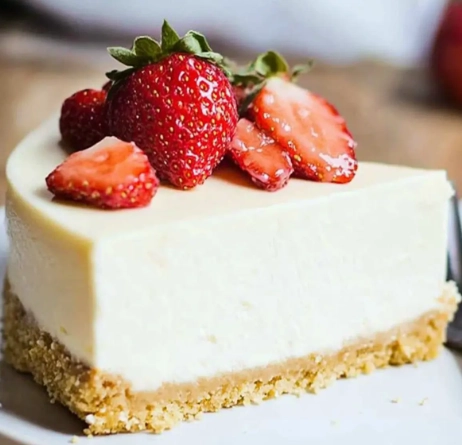
| Ingredient | Quantity | Why It's Crucial & What to Avoid |
|---|---|---|
| Full-Fat Cream Cheese | 32 oz (4 blocks) | The star. Use brick-style, not spreadable tubs. Low-fat versions have more water and stabilizers, leading to a weak, sometimes grainy texture. Brands like Philadelphia work perfectly. |
| Granulated Sugar | 1 cup | Sweetens and helps create a smooth, creamy emulsion with the cheese. Don't reduce it drastically; it affects structure. |
| Sour Cream | 1 cup | The secret weapon for creaminess and tang. It adds moisture and fat, making the cake lush and helping prevent cracks. Full-fat is best. |
| Large Eggs | 4 | Provide structure. They must be at room temperature to blend smoothly without overmixing. |
| Pure Vanilla Extract | 2 tsp | Enhances flavor. Imitation vanilla can taste artificial. |
| Graham Cracker Crumbs | 2 cups | For the crust. You can buy pre-crumbed or crush whole crackers. Add 1/4 cup melted butter and 2 tbsp sugar. |
Pro-Tip from a 10-Year Mistake: Every single ingredient, especially the cream cheese, eggs, and sour cream, MUST be at room temperature (sit out for 1-2 hours). Cold ingredients don't incorporate evenly, forcing you to overmix to eliminate lumps. Overmixing = incorporating too much air = the cake rising and falling dramatically = cracks. This is the #1 silent killer of smooth cheesecakes.
The Foolproof Step-by-Step Process
This process is designed to minimize air and maximize creaminess. Follow it like a relaxing ritual, not a race.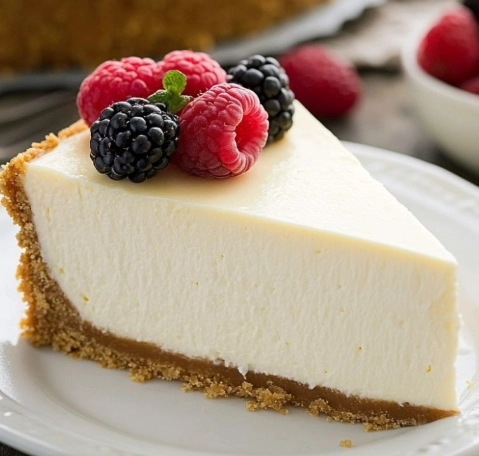
1. Prep the Pan (No Fancy Equipment Needed)
Use a 9-inch springform pan. Tear off a large piece of heavy-duty aluminum foil. Place the pan bottom in the center and wrap the foil up the sides, creating a waterproof seal. This is our water bath hack. Spray the inside with baking spray. Mix the crust ingredients, press firmly into the bottom, and pre-bake at 325°F for 10 minutes. Let it cool while you make the filling.
2. Mix the Filling: The Low & Slow Method
In your stand mixer with the paddle attachment (or a large bowl with a hand mixer), beat the room-temperature cream cheese alone for 1 minute on medium-low until it's completely smooth and pliable. Scrape the bowl. Add the sugar and beat for another minute on low, just until combined. Scrape again.
Now, add the sour cream and vanilla. Mix on low until uniform. The key is to keep the mixer speed low. We are not whipping, we are homogenizing.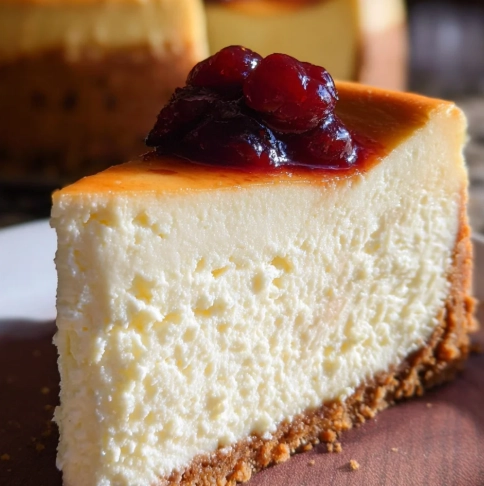
3. Add the Eggs: The Final, Gentle Step
With the mixer on the lowest possible speed, add the eggs one at a time. Mix each egg until just barely disappeared into the batter—no more. After the last egg, stop the mixer immediately. Use a spatula for one final scrape-and-fold to incorporate anything at the bottom. The batter should be thick, smooth, and glossy, with no streaks.
Stop Here if You See This: If your batter looks aerated or fluffy, you've overmixed. It's okay, the cake will still taste great, but it might crack. Next time, remember: low speed, short mixing times.
Pour the batter onto the cooled crust. Tap the pan firmly on the counter 3-4 times to release any large air bubbles. Smooth the top.
Baking Temperatures: The Make-or-Break Detail
This is where most recipes get vague, and where cracks are born. We're using a two-temperature method without a water bath.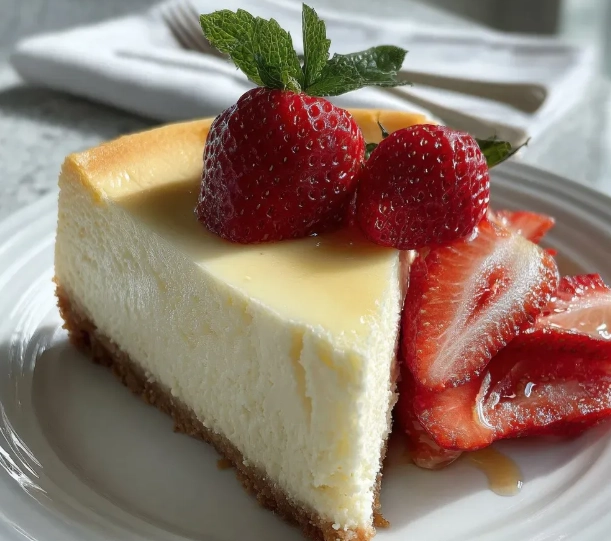
Place your foil-wrapped springform pan into a large roasting pan. Bring a kettle of water to a boil. Place the roasting pan with the cheesecake on the middle rack of your oven, THEN carefully pour the hot water into the roasting pan until it comes about halfway up the side of the springform. This creates a steamy environment (like a water bath) without the risk of leakage.
Bake at 325°F (163°C) for 1 hour to 1 hour 15 minutes. The edge should look set, but the center—about a 4-inch diameter circle—should still have a pronounced, gentle jiggle, like Jell-O. It should not look liquid. If the whole top is firm, it's overbaked.
Turn the oven OFF. Crack the oven door open with a wooden spoon and let the cheesecake sit in the cooling oven for 1 hour. This gradual temperature drop is the second secret to preventing cracks.
The Critical Cooling & Chilling Phase
After the hour in the turned-off oven, remove the cheesecake (carefully, it's still hot). Remove it from the water bath and place it on a wire rack. Run a thin knife around the very edge to separate it from the pan—this prevents it from sticking and tearing as it contracts.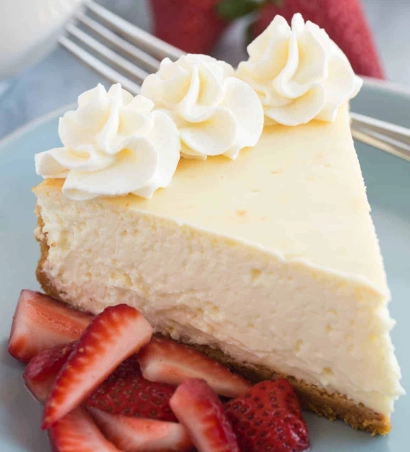
Let it cool to room temperature on the counter. This can take another 2-3 hours. Don't rush it.
Once completely cool, loosely cover the top with plastic wrap and refrigerate for at least 12 hours, ideally 24. This is non-negotiable. The cheesecake needs this time to fully set its structure and develop its flavor. Slicing into it early is the biggest disappointment—it will be soft and mushy.
Easy Variations: No-Bake & Flavor Twists
This base recipe is incredibly adaptable.
For a No-Bake Cheesecake: Skip the eggs. Increase the sugar to 1 1/4 cups. After mixing the cream cheese, sugar, sour cream, and vanilla, fold in 2 cups of cold heavy whipping cream that's been whipped to medium peaks. Pour into the crust and chill for at least 6 hours. It's lighter but still creamy.
Flavor Ideas (Add with the vanilla):
- Lemon Zest: Add 2 tbsp fresh zest.
- Chocolate Swirl: Melt 4 oz semi-sweet chocolate, cool slightly, and drizzle over filled pan. Swirl with a knife.
- Salted Caramel: Swirl in 1/2 cup of thick salted caramel sauce before baking.

Leave a Comment