You don't need a piping bag full of buttercream or years of experience to make a cake look special. Icing sugar—that fine, powdery stuff in your cupboard—is one of the simplest and most elegant ways to decorate. I remember my first attempt years ago. I dumped a cup of sugar on a warm cake and ended up with a gloppy, wet mess. It was a lesson learned the hard way. But when you know a few basic tricks, it becomes almost foolproof. This guide will show you exactly how to use icing sugar to create beautiful, professional-looking designs with tools you probably already own.
What You'll Learn in This Guide
Why Icing Sugar is a Beginner's Best Friend
Let's be clear. Icing sugar (also called powdered sugar or confectioners' sugar) isn't just for dusting over French toast. For cake decorating, it's a secret weapon. It's cheap, requires no special cooking skills, and if you mess up, you can literally blow the mistake away and start over. Unlike buttercream, you're not committing to a heavy layer of frosting. It adds a hint of sweetness and a beautiful, snowy finish that looks sophisticated. It works on pound cakes, sponge cakes, brownies—almost any baked good with a relatively flat top.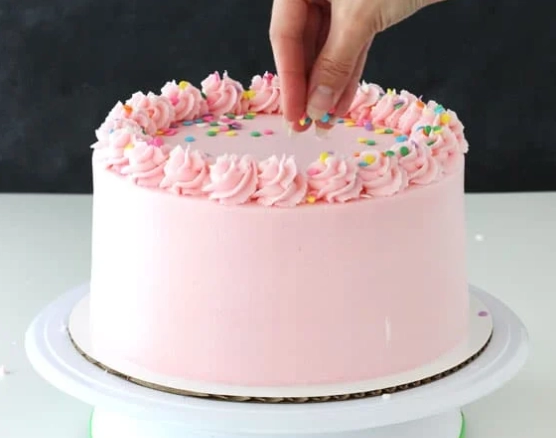
The Minimalist Tool Kit You Actually Need
You can spend a fortune on baking gadgets, but for this, you need almost nothing. Here’s the breakdown of what’s essential versus what’s just nice to have.
| Tool | Essential or Optional? | Why You Need It & Pro Tip |
|---|---|---|
| Fine-Mesh Sieve or Sifter | Essential | This is non-negotiable. Spooning sugar directly creates clumps. A sieve gives you that light, even snow-like dusting. A small tea strainer works in a pinch. |
| Icing Sugar (Powdered Sugar) | Essential | Make sure it's fresh and lump-free. If it's been in the pantry for months, sift it twice before using. |
| Paper or Plastic Stencils | Optional (but game-changing) | For creating sharp shapes and patterns. You can buy them or make your own from parchment paper. |
| Small Offset Spatula or Butter Knife | Helpful | For gently pressing a stencil onto the cake surface without disturbing the crumb. |
| Paper Towels or a Pastry Brush | Helpful | For cleaning up stray sugar specks and creating crisp edges. |
See? Your kitchen is likely already stocked. The sieve is the only item I'd say you must have, and it costs next to nothing.
The Non-Negotiable Cake Prep Step Everyone Forgets
This is where most beginners trip up. You cannot decorate a warm or sticky cake. The sugar will melt or clump, and you'll have a sad, soggy design.
Rule #1: Cool Completely. Let the cake cool in the pan for 10 minutes, then transfer it to a wire rack. Wait until there's no warmth at all when you touch the bottom. This can take a few hours.
Rule #2: Create a Smooth Canvas. If your cake has a domed top, use a serrated knife to slice it level. Crumbs are the enemy of a clean design. You can give the surface a very light "crumb coat" by brushing away loose crumbs with a dry pastry brush. Some bakers like to give the cake a thin glaze first (like a simple syrup or a thin apricot jam wash) to seal the surface, but for a true beginner, a perfectly cool, crumb-free cake is enough.
Three Easy Techniques to Try Tonight
Start with the simplest method and work your way up. Each one builds on the last.
1. The Classic Dusting (The Foundation)
This is your baseline skill. Place your cooled cake on a plate or cake stand. Hold a fine-mesh sieve about 8-10 inches above the cake. Put a few tablespoons of icing sugar into the sieve. Gently tap the side of the sieve with your hand or a spoon. Don't shake it vigorously—gentle taps create a finer, more controlled shower.
Watch the sugar fall like snow. You can go for a light dusting or a heavier coat. Use a paper towel to wipe any sugar off the plate for a clean look. That's it. You've just decorated a cake.
2. The Stencil Method (Instant Wow Factor)
This is where the magic happens. You'll need a stencil—a lace doily, a paper snowflake, or a store-bought plastic stencil works perfectly.
Place the stencil flat on the cake. If it's paper, you might want to spray it lightly with cooking spray and let it dry first to make it less porous. Use your fingers or a small spatula to gently press it down so it adheres to the cake's surface. This prevents sugar from creeping underneath.
Now, take your sieve and dust the icing sugar over the stencil. Be generous. Carefully, starting at one edge, lift the stencil straight up and away. Beneath it will be a perfect, crisp design. If you see a few stray specks, use a dry brush or the corner of a paper towel to tidy them.
3. The Freehand "Negative Space" Design
This is for when you're feeling a bit more adventurous. Place simple, flat objects directly onto the cake before dusting. Think fresh, clean leaves (like bay leaves), large paper cut-outs of stars or hearts, or even a piece of lace laid flat.
Dust the icing sugar over the entire cake and the objects. Then, carefully remove the objects. The shape of the object will be left behind in the cake's color, surrounded by the white sugar. It creates a beautiful, subtle contrast. The key is using objects that are thin and lie perfectly flat.
Pro Tips and Answering Your Questions
After teaching this for years, I hear the same questions again and again. Here’s the real talk you won't find in every basic guide.
The Cornstarch Thing: Most icing sugar contains about 3% cornstarch to prevent caking. This is good for dusting. In very humid climates, some bakers add a tiny bit more cornstarch to the sugar before sifting to help the design stay put. I'm cautious with this—too much can give a slightly chalky aftertaste. Test it on a cookie first.
Colored Icing Sugar: You can buy it or make your own by pulsing a tiny bit of powdered food coloring with icing sugar in a clean coffee grinder. Gel food coloring won't work—it makes clumps. You need the powdered kind.
Storage: A cake decorated with just icing sugar doesn't need the fridge. In fact, the fridge will introduce moisture and ruin the design. Keep it covered at room temperature for up to two days. For longer storage, freeze the undecorated cake and decorate it the day you thaw and serve it.
Quick Answers to Common Hiccups
The beauty of decorating with icing sugar is in its simplicity and elegance. It forces you to focus on the basics: a well-baked, cool cake and a steady hand. Forget the pressure of perfect piping. Start with a dusting, try a stencil next time, and soon you'll see plain cakes as blank canvases waiting for your simple, snowy touch.




Leave a Comment