Let's cut to the chase. The secret to perfect pastry dough isn't a single magic ingredient or a hidden step from a French pastry chef's notebook. It's a combination of understanding the science of your ingredients and mastering a few non-negotiable techniques. Most recipes get you 80% of the way there, but that last 20%—the difference between a good crust and a spectacular, shatteringly flaky one—is what we're here to unpack. I've ruined more batches than I care to admit by assuming cold butter was cold enough, or by rushing the resting time. The truth is, perfect pastry is less about following a recipe to the letter and more about learning to read the dough.
What You'll Learn Inside
- The Core Principles You Can't Ignore
- A Foolproof Step-by-Step Guide
- Advanced Tips & Troubleshooting
- Your Pastry Dough Questions, Answered
Unlocking the Core Principles of Perfect Pastry
Think of this as the rulebook. Break these, and your dough will let you know.
Ingredient Science: It's More Than a Shopping List
Every component has a job. Use the wrong player, and the whole team fails.
Flour: All-purpose flour is the standard, and for good reason. Its moderate protein content (around 10-12%) develops enough gluten to give structure but not so much that the pastry becomes tough. Pastry flour (lower protein) yields a more tender, crumbly result, while bread flour (high protein) is your enemy here. A common unmentioned mistake? Not fluffing your flour before measuring. Scooping directly from the bag packs it down, leading to a dry, dense dough. Spoon and level for consistency.
Fat: This is where the flakiness lives. Butter gives flavor and steam for lift. Shortening or lard creates superior flakiness due to higher melting points and different fat crystals. The expert move? Use a combination. I often go for 75% butter for taste and 25% high-quality leaf lard for unparalleled flakiness. The fat must be cold, but here's the nuance: it shouldn't be rock-solid. You should be able to press your thumb into it and leave an indentation with slight resistance. If it shatters, it's too cold and won't incorporate evenly.
Liquid: Usually ice water. Its sole purpose is to hydrate the flour just enough to bring the dough together. Too much, and you get a wet, sticky mess that promotes gluten development. Too little, and it crumbles. A pro tip from a baker friend in humid New Orleans: replace 1-2 tablespoons of the water with vodka or vinegar. The alcohol inhibits gluten formation (evaporating during baking), and the acid tenderizes the dough, making it easier to roll without overworking.
Salt & Sugar: Salt strengthens gluten and enhances flavor. A pinch is non-optional. Sugar, in sweet pastry (pâte sucrée), tenderizes by absorbing water and slowing gluten development.
Gluten Management: The Art of Gentle Handling
Gluten is the protein network that gives structure. We want just enough to hold the pastry together, but not so much that it becomes chewy. This is achieved through two things: minimal mixing and adequate resting.
When you add water and mix, gluten starts forming. Stop the moment the dough comes together in a shaggy mass. It will look messy. That's good. Over-kneading is the death of tenderness.
Resting, or chilling, is non-negotiable for two reasons: it re-chills the fat and, crucially, it allows the gluten strands you just created to relax. If you try to roll a dough immediately after mixing, it will fight you, shrinking back like a rubber band. An hour in the fridge makes it compliant.
The Foolproof Step-by-Step Guide to Flaky Perfection
Let's apply those principles. This is my go-to method for a classic all-butter pie dough, scalable for a double crust.
Stage 1: Preparation is 90% of the Battle
Get everything ready before you touch the flour. It's a sprint, not a marathon.
- Cube 225g (2 sticks) of unsalted butter. Place it back in the fridge.
- Measure 300g (2.5 cups, spooned & leveled) of all-purpose flour into a large bowl. Add 1 teaspoon of salt and 1 tablespoon of sugar (if making sweet pastry). Whisk to combine.
- Fill a glass with 120ml (1/2 cup) of water. Drop in a few ice cubes. Have a tablespoon ready.
- If your kitchen is warm (above 21°C/70°F), consider chilling your bowl and flour for 15 minutes.
Stage 2: Cutting in the Fat & Hydrating
Add the cold butter cubes to the flour. Using a pastry blender, two forks, or your fingertips, work quickly to break the butter down into pea-sized and smaller pieces. Some flat, shard-like pieces are excellent—they create long, flaky layers. The mixture should look like coarse crumbs with visible butter bits.
Now, drizzle in the ice water (no cubes!) one tablespoon at a time. Toss the mixture with a fork or your hands. Stop adding water the moment the dough holds together when you pinch a handful. You may not need all the water. It will still look crumbly in the bowl.
Dump the shaggy mass onto a clean surface. Use the heel of your hand to gently press and smear the dough away from you in a few quick strokes. This technique, called fraisage, helps create flat layers of butter without overworking the dough. Gather it into two discs, wrap tightly in plastic, and refrigerate for at least 1 hour, preferably 2.
That rest is your secret weapon. Don't skip it.
Stage 3: Rolling, Shaping, and the Final Chill
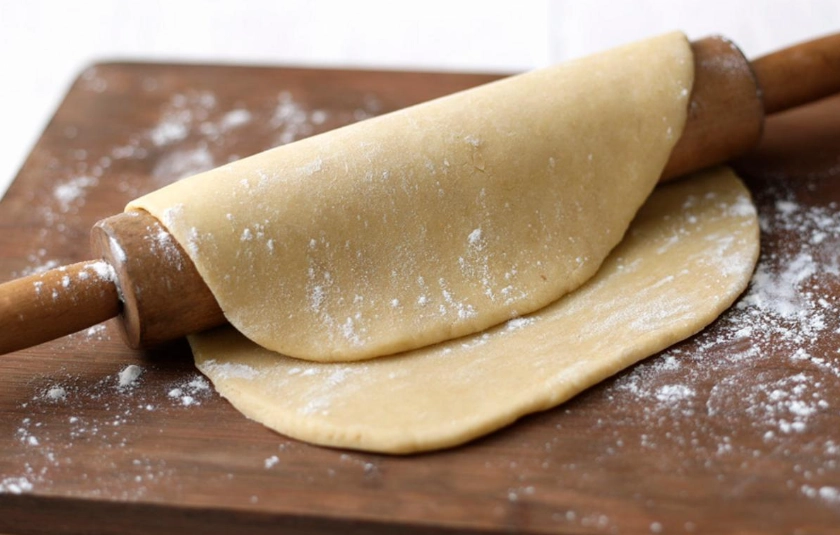
On a lightly floured surface, roll one disc from the center out, rotating it a quarter turn every few rolls to maintain a circle and prevent sticking. Aim for about 3mm (1/8 inch) thick.
Transfer it to your pie plate or baking sheet. If it tears, patch it with a scrap—no one will know after baking. Don't stretch the dough to fit; gently lift and settle it in. Trim the edges, then chill the shaped crust again for 30 minutes before blind-baking or filling. This final chill prevents the crust from slumping in the oven.
Advanced Techniques & Troubleshooting for Real Kitchens
Recipes assume a perfect, cool, calm environment. Our kitchens are not labs.
Adapting to Your Environment
If your kitchen is hot, work in shorter bursts. Keep the dough in the fridge between steps. You can even grate frozen butter into the flour for faster, more even incorporation. If your dough feels too soft while rolling, slide it onto a tray and pop it back in the fridge for 10 minutes. It's okay. This isn't a race.
Fat Comparison: Choosing Your Weapon
| Fat | Flakiness | Flavor | Best For | Handling Notes |
|---|---|---|---|---|
| Butter | Very Good | Excellent, rich | All-purpose, sweet pastries | Melts easily. Keep very cold. |
| Shortening | Excellent | Neutral | Super flaky crusts, humid climates | Easy to work with, high melting point. |
| Lard (Leaf) | Exceptional | Rich, savory (minimal pork taste if rendered well) | Savory pies, biscuits, ultra-flaky layers | Creates the most tender, flaky texture. |
| Combination (Butter + Lard) | Outstanding | Best of both worlds | The ultimate pie crust | My personal favorite for balanced results. |
Don't be afraid of lard. A resource like the USDA's food composition database will show you that modern, commercially rendered lard has less saturated fat than butter. It's a fantastic, traditional baking fat.
One specific struggle I had for years was a soggy bottom crust on fruit pies. The fix? Brush the unbaked bottom crust with a thin layer of beaten egg white or melted apricot jam before adding a wet filling. It creates a barrier. Also, bake your pie on a preheated baking sheet to give the bottom an extra blast of heat.
Your Pastry Dough Questions, Answered (By Someone Who's Messed It Up)
Perfect pastry dough is a skill, not a mystery. It rewards patience and punishes haste. Start with cold ingredients, handle with a light touch, and let time do its work in the fridge. Once you internalize these principles, that recipe on the back of the flour bag will transform from a list of instructions into a logical process you can control and adapt. Now go preheat your oven. It's time to bake.



Leave a Comment