If the thought of decorating cookies with royal icing makes you picture a kitchen covered in sticky, runny frosting and lopsided hearts, take a deep breath. I've been there. My first batch looked like a preschool art project gone wrong. But here's the secret no one tells beginners: royal icing is surprisingly forgiving once you understand a few basic rules. It's less about artistic genius and more about controlling a simple mixture of sugar, water, and egg whites (or meringue powder). This guide will walk you through the absolute essentials, skipping the intimidating pro jargon.
What You'll Learn in This Guide
Gathering Your Supplies (You Don't Need Fancy Gear)
Before you start mixing, let's get your toolkit ready. You probably have most of this already.
The Non-Negotiables:
- Cookies: Use a sturdy, non-spreading cut-out sugar cookie. A recipe with a bit of baking powder gives a flatter surface. Let them cool completely.
- Powdered Sugar (Icing Sugar): Sift it. I know it's a pain, but lumps in your icing are the enemy of smooth lines.
- Meringue Powder or Egg Whites: For beginners, meringue powder is the winner. It's pasteurized, safe, and consistent. Wilton or CK Products brands are reliable. Fresh egg whites work but require more precision.
- Gel Food Coloring: Liquid food coloring waters down your icing. Gel or paste colors (like AmeriColor or Wilton) are concentrated and won't ruin your consistency.
- Mixing Bowl & Hand Mixer/Stand Mixer: You need to whip air into the icing. A whisk and brute force won't cut it.
The "Make Your Life Easier" Tools:
- Squeeze Bottles or Piping Bags: Plastic squeeze bottles (like for ketchup) are fantastic for beginners and for flooding. Piping bags with couplers and tips (like Wilton #2, #3, #5) are for outlining and details.
- Toothpicks or Scribble Tool: A humble toothpick is your best friend for popping air bubbles and nudging icing into corners.
- Small Bowls & Spoons: For dividing and coloring icing.
- Damp Paper Towels & Plastic Wrap: Royal icing dries and crusts over in minutes. You must keep it covered with a damp cloth.
Pro Tip from My Mess-Up: Don't buy a 50-piece piping tip set. Start with two: a small round tip like #2 for outlining and writing, and a slightly larger one like #5 for filling in smaller areas. That's all you need for 90% of beginner designs.
Making Foolproof Royal Icing
Let's mix. This is a standard, reliable ratio. I prefer the meringue powder method for safety and ease.
Basic Royal Icing Recipe:
- 4 cups (about 480g) sifted powdered sugar
- 3 tablespoons meringue powder
- 1/2 cup warm water, plus more as needed
- 1 teaspoon clear vanilla or almond extract (optional, for flavor)
How to Make It:
- In your mixing bowl, combine the sifted powdered sugar and meringue powder. Whisk them together by hand to combine.
- Add the warm water and extract. Start mixing on LOW speed until the dry ingredients are moistened. This prevents a sugar cloud explosion.
- Turn the mixer to medium-high speed and beat for 2-3 minutes, until the icing is very white, glossy, and forms stiff, glossy peaks. It should look like thick shaving cream.
The Biggest Beginner Mistake: Over-mixing. Once you have stiff peaks, stop. If you mix for 5 or 6 minutes, you incorporate too much air, creating a foamy, bubbly icing that's terrible for smooth flooding. Set a timer.
This thick, peaking icing is your "stiff consistency" base. You'll now thin portions of it down for different jobs.
The 3 Icing Consistencies You MUST Know
This is the single most important concept in cookie decorating. Getting the consistency right solves 80% of problems. Think of it as the thickness of the icing.
| Consistency | What It's For | How to Get It | The "Test" |
|---|---|---|---|
| Stiff / Outline | Making raised lines, dots, writing, intricate details. It holds its shape perfectly. | This is your icing right out of the mixer. No water added. | Lift your beater—icing forms a sharp, pointy peak that doesn't droop. |
| 15-Second / Flood | Filling in ("flooding") the inside of your outlines. It should flow smoothly but not run off the cookie. | Add water, 1/2 teaspoon at a time, to stiff icing. Mix thoroughly after each addition. | Drag a knife through the icing. The line should disappear and become smooth again in 15 seconds. It should be the consistency of thick honey or pancake syrup. |
| 10-Second / Detail Flood | For smaller flood areas or when you want more control. Dries a bit faster. | Same as above, but add slightly less water. | The knife line disappears in about 10 seconds. |
Here's the expert nuance most tutorials miss: Your "15-second icing" for flooding should still have a tiny bit of body. If you pour it, it should ribbon and pile on itself for a second before settling. If it's as runny as milk, it's too thin and will bleed over your outline. When in doubt, go slightly thicker. You can always nudge it with a toothpick.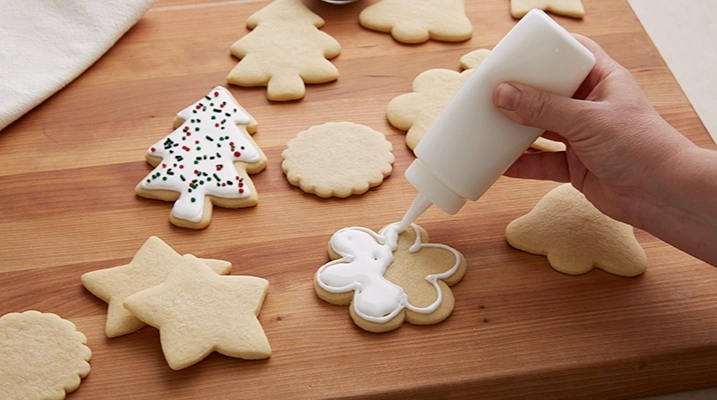
Step-by-Step: Decorating Your First Cookie
Let's decorate a simple heart cookie. Follow this sequence: Outline, Flood, Dry, Detail.
Step 1: Prepare Your Icing Colors
Scoop some of your stiff icing into small bowls. Add gel color with a toothpick and mix thoroughly. Remember, colors darken as icing dries. For flooding, take a portion of your colored stiff icing and thin it down to 15-second consistency in a separate bowl. Keep all bowls covered with a damp cloth.
Step 2: Outline the Cookie
Fit a piping bag with a #2 or #3 tip and fill it with stiff consistency icing. Hold the bag perpendicular to the cookie, about 1/4 inch above it. Gently squeeze and trace the outer edge of your heart. Your line should be raised and sit on top of the cookie. This outline acts as a dam for the flood icing. Connect the end to the beginning. Let this outline set for a minute or two.
Step 3: Flood the Center
Now use your 15-second consistency icing. You can use a piping bag with a slightly larger tip (#5), a squeeze bottle, or even a spoon. Fill the center of your outlined heart. Don't overfill—just get it in there. Then, take a toothpick and gently spread the icing to touch all the edges of your outline. Pop any air bubbles you see with the toothpick. This is called "flooding."
Step 4: The Crucial Dry Time
Let the flooded cookie dry completely. This can take 4-8 hours, depending on humidity. Don't rush it. The surface should be hard to the touch. You can add details on top of a dry flood layer.
Step 5: Add Details (Wet-on-Wet vs. Wet-on-Dry)
For simple dots or stripes, you can use the wet-on-wet technique. Right after flooding (while the flood layer is still wet), pipe dots or lines of a different color on top. They will melt in slightly, creating a soft, blended look.
For precise lines, writing, or adding a second layer (like a smaller heart on top), use the wet-on-dry technique. Wait for the base flood to dry completely, then pipe your details on top using stiff consistency icing.
Answers to Your Tricky Questions
 Can I make royal icing ahead of time? How do I store it?



Leave a Comment