Quick Guide to Perfect Pretzel Bites
Let's be honest. The first thing that comes to mind when you hear "pretzel bites" is probably a cardboard tray from a concession stand, the kind that's a little too salty and maybe a bit stiff. But what if I told you the real magic happens when you nail that perfect, cloud-like, chewy-yet-tender interior? That's the holy grail. We're not talking about dense little nuggets here. We're talking about soft pretzel bites that practically melt in your mouth, with a glossy, mahogany-brown crust that gives just the right amount of resistance. That's what this is all about.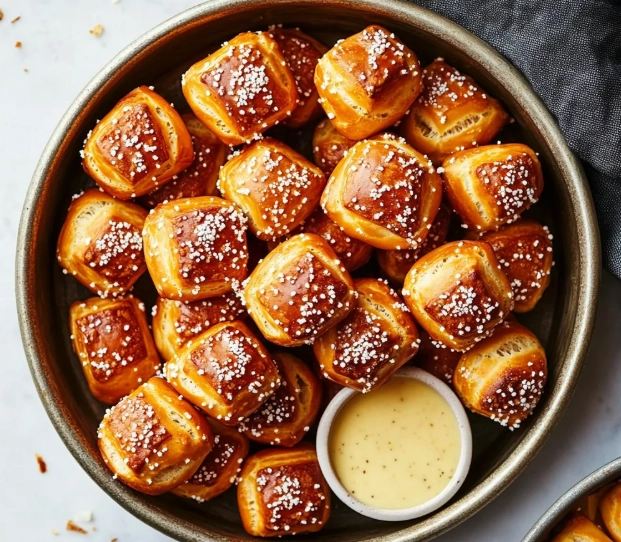
I got obsessed with this after a seriously disappointing batch from my own oven. They came out looking the part but had the texture of seasoned cardboard. It was a personal low. So, I dove in, burned a few trays (figuratively and literally), and figured out what separates the good from the truly great. This isn't just a recipe. It's a breakdown of the science, the technique, and the little secrets that make all the difference between a snack and an experience.
The Anatomy of a Perfectly Soft Pretzel Bite
Before you even touch flour, you need to know what you're aiming for. A top-tier soft pretzel bite has a specific personality.
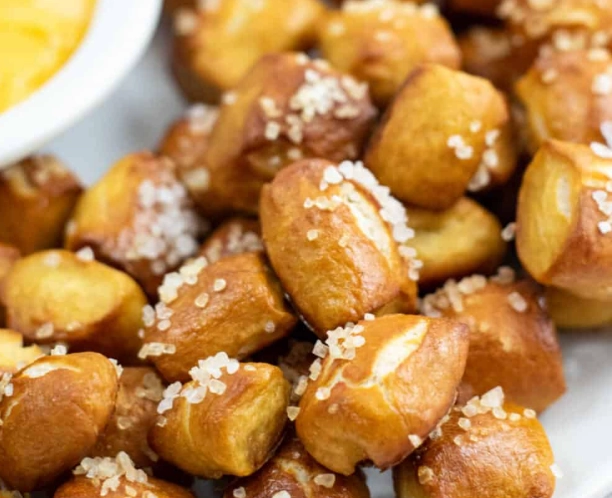
First, the exterior. It should be thin and crisp, not thick and hard. A deep brown color from the baking soda bath (more on that nuclear option later) and a distinct, slightly crackly sheen. Then you bite in. The interior should be tender, moist, and full of irregular air pockets. It should offer a pleasant, elastic chew, not a dense, bready crumb. It's that contrast—crisp shell, pillowy interior—that's utterly addictive. If your bites are uniformly soft all the way through, you've missed a key step. If they're tough, well, we've got work to do.
The Non-Negotiable Ingredients for Softness
You can't build a house without good bricks. For soft pretzel bites, your ingredients are your foundation.
- Bread Flour vs. All-Purpose: This is the first big decision. All-purpose flour is fine, it'll give you a softer, more tender crumb right off the bat. But bread flour, with its higher protein content (usually 12-14%), gives you more structure and that signature chewy pull. My take? For the ultimate soft pretzel bites, I actually blend them. Try 60% bread flour, 40% all-purpose. You get the best of both worlds: structure and tenderness.
- The Fat Factor: This is the secret weapon for a soft crumb that stays soft. A bit of butter or oil (I prefer melted butter for flavor) coats the gluten strands, tenderizing them. It also helps retain moisture. Don't skip it.
- Malt: The Flavor Key: Traditional pretzels use barley malt syrup or powder. It adds a subtle, nutty, complex sweetness that plain sugar doesn't. It also feeds the yeast and promotes browning. You can find it online or in health food stores. If you're in a pinch, brown sugar is an okay substitute, but the flavor profile changes.
- Yeast is Your Friend: Instant yeast is the easiest. Just make sure it's not old. That soft, airy interior comes from proper fermentation, and dead yeast is a one-way ticket to dense-town.
The Step-by-Step Process: Where Softness is Made (or Lost)
Okay, you've got your ingredients. Now, the process. This is where most home bakers go wrong. It's not just mix, shape, bake.
Mixing and Kneading: Don't Overdo It
You want to develop enough gluten for structure, but over-kneading makes the gluten too tight and tough. Mix until the dough comes together and is slightly tacky but not sticky. Knead by hand for 8-10 minutes or with a dough hook for 5-7 minutes, until it's smooth and elastic. A good test: the windowpane test. Stretch a small piece. If you can stretch it thin enough to see light through it without it tearing immediately, you're good. Stop right there.
The First Rise: Flavor Development
Let the dough rise in a lightly oiled bowl, covered, in a warm, draft-free spot. This isn't just about doubling in size. This fermentation develops flavor. A longer, slower rise in the fridge overnight (yes, you can do this!) will give you even more complex flavor. For soft pretzel bites, a 1-1.5 hour room-temp rise is usually perfect.
Shaping the Bites: Consistency is King
Divide the dough, roll it into ropes, and cut it into even pieces. I aim for pieces about 1-inch big. Why? They bake evenly. If some are huge and some are tiny, you'll have a mix of over-baked and under-baked bites. Roll them into rough balls and let them rest for 5 minutes. This relaxes the gluten, making them easier to shape and ensuring they don't shrink weirdly later.
The Infamous Baking Soda Bath: The Game Changer
This is the step that terrifies people and defines the authentic pretzel. It's not just for color. The alkaline solution (traditionally food-grade lye, but baking soda is the safe, home-kitchen alternative) causes a chemical reaction on the dough's surface called the Maillard reaction. This gives the deep brown color, the distinctive shiny crust, and that unique "pretzel" flavor. Crucially, it also sets the exterior quickly in the oven, allowing the interior to steam and expand, creating that soft, airy center.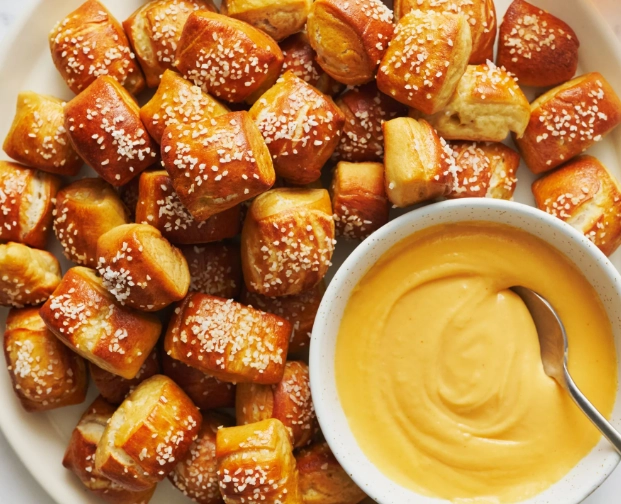
Bring a pot of water to a gentle simmer, not a rolling boil. Add your baked (or regular) baking soda—it will fizz. Carefully drop in 5-6 dough bites at a time. They'll sink, then float in about 20-30 seconds. That's your cue. Fish them out with a slotted spoon, let the excess water drip off, and place them on a parchment-lined baking sheet. Don't crowd them.
Baking: The Final Transformation
Egg wash? Not for traditional pretzels. The bath gives the shine. But I do sprinkle with coarse salt immediately after the bath, while they're still wet, so it sticks. Bake in a hot oven—425°F (220°C) is my sweet spot. The high heat creates an instant "oven spring," where the interior gases expand rapidly, pushing against the set crust, creating those beautiful air pockets. Bake for 12-15 minutes until deeply browned. Don't underbake looking for softness; a pale pretzel bite is a sad, doughy pretzel bite.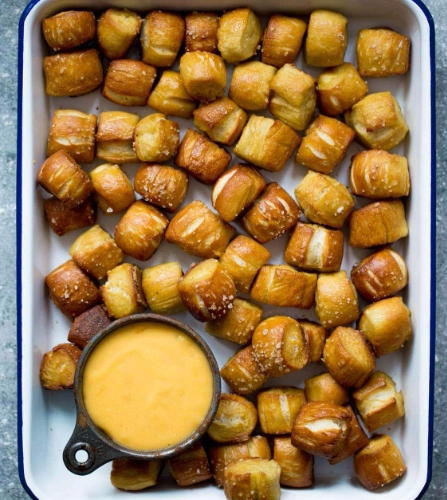
Quick Troubleshooting Table: Why Aren't My Pretzel Bites Soft?
| Problem | Likely Cause | How to Fix It Next Time |
|---|---|---|
| Dense, heavy interior | Over-kneaded dough, dead yeast, or not enough rising time. | Check yeast freshness. Knead less. Ensure proper rise in a warm spot. |
| Hard, tough exterior | Over-baked, oven temp too low, or dough balls too large. | Bake at a higher temp for less time. Cut smaller, even pieces. |
| Pale color, bland flavor | Baking soda bath too weak, water not simmering, or bath time too short. | Use "baked" baking soda. Ensure water is simmering. Bathe for a full 30 seconds. |
| Wrinkled, shriveled bites | Dough over-proofed (rose too long) before baking. | Shorten the final proofing time after shaping. |
| Not chewy at all | Used only all-purpose flour, or fat content too high. | Incorporate some bread flour. Measure fat accurately. |
Beyond the Basic: Flavor Twists and Dipping Sauces
Once you've mastered the basic soft pretzel bite, the world is your oyster. Or your cheese board.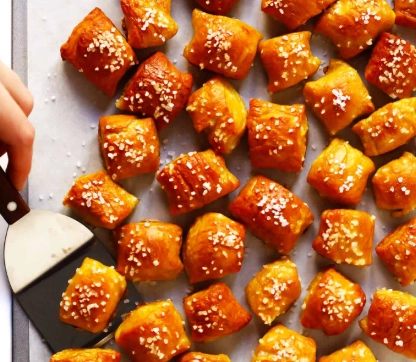
You can mix stuff right into the dough. A handful of shredded cheddar cheese. Everything bagel seasoning. Minced garlic and rosemary. Go wild. After the baking soda bath, before salting, is your chance to add toppings. Grated Parmesan, cinnamon sugar (skip the coarse salt if doing this), sesame seeds.
But let's be real. The dip is half the fun. Here's my personal ranking of dipping sauces for soft pretzel bites:
- Beer Cheese Sauce: Non-negotiable. The classic. Use a mild lager, sharp cheddar, a bit of mustard. It's a project, but it's worth it.
- Spicy Brown Mustard: The purist's choice. The sharpness cuts the richness perfectly.
- Jalapeño Queso: A little kick, a lot of creamy goodness. Great for a crowd.
- Sweet Glaze: Vanilla icing or a cream cheese frosting for cinnamon sugar bites. Don't knock it 'til you try it.
I tried a maple mustard once on a whim. Sounded weird. Was actually pretty fantastic. Don't be afraid to experiment.
The Store-Bought Shortcut: A Realistic Review
Not everyone has time to make dough from scratch on a Tuesday. I get it. The frozen food aisle is packed with options claiming to be "soft." Some deliver, some are hockey pucks in disguise.
Based on my own (extensive) "research," here's the lowdown. The ones that come in a bag, fully baked, just needing a warm-up? They're almost always a disappointment. They steam and get soggy or heat unevenly. The ones that are frozen dough pieces you bake from raw? Much better. They have a chance to develop a proper crust and soft interior in your oven.
Look for brands that use simple ingredients. If the list reads like a chemistry experiment, the texture will probably reflect that. Brands like SuperPretzel are widely available and decent in a pinch, but honestly, the texture is more uniformly soft without that great crust contrast. The Trader Joe's frozen pretzel bites are a fan favorite for a reason—they come close to the real thing.
My advice? Keep a bag of the frozen raw dough bites for emergencies. But know that the homemade version, with its specific texture and flavor, is in a different league.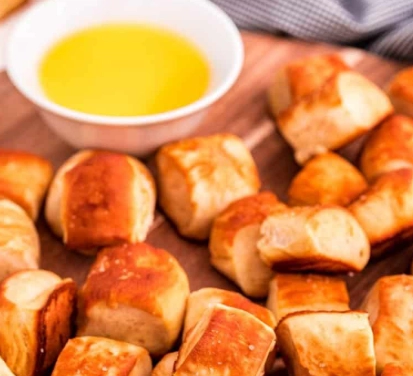
Your Soft Pretzel Bites Questions, Answered
The Final Word on Softness
Making incredible soft pretzel bites at home is totally achievable. It's about understanding the role of each ingredient and each step. The softness comes from a balance: proper gluten development, adequate fat, a good rise, and that critical baking soda bath that sets the stage for the interior to puff up into soft, chewy perfection.
It might take one try to get the feel for the dough. You might over-salt a batch (guilty). But when you pull that tray out of the oven, see the deep brown shine, break one open to see the soft, steamy interior, and dip it into something delicious... you'll realize it was worth every minute. It's not just a snack. It's a little project of deliciousness. Now go preheat your oven.

Leave a Comment