Quick Navigation
Let's be honest. We've all been there. You follow a recipe to the letter, but instead of a fluffy, sky-high cake, you get a sad, dense pancake lurking in the pan. Or your perfect cookie dough melts into a single, giant puddle in the oven. It's frustrating, right? For years, I just blamed the recipe or my oven. Then I started digging into the baking science explained behind it all, and let me tell you, it was a game-changer. Suddenly, baking wasn't about blind faith in instructions; it was about understanding.
That's what this guide is for. We're going to strip away the mystery. We won't just tell you what to do; we're going to explain why you do it. This is your backstage pass to the kitchen laboratory.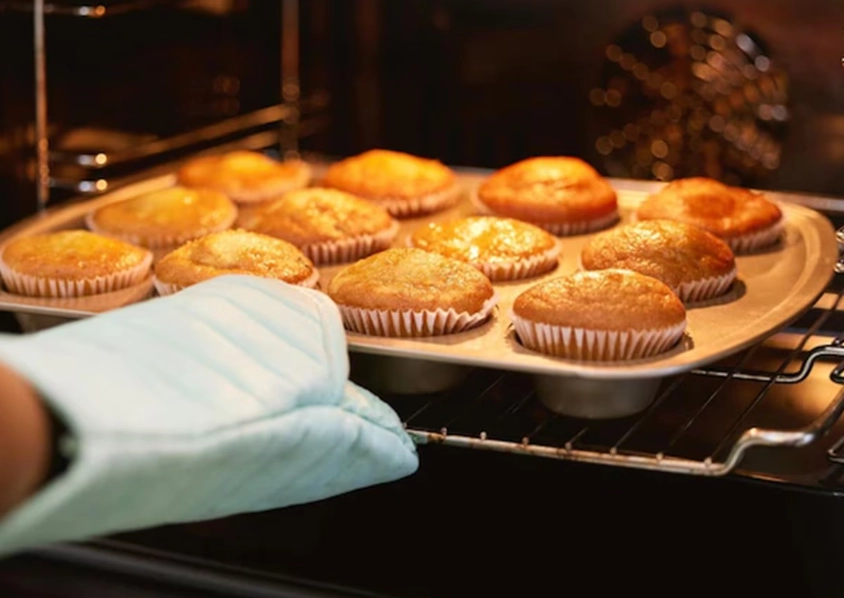
The Core Chemical Reactions: The Engine of Baking
Every baked good is the final product of a series of chemical and physical transformations. If you understand these, you're halfway to mastering anything. This is the heart of baking science explained.
Leavening: How Things Rise (And Sometimes, Don't)
Air, steam, and gas. That's the holy trinity of lift. Leavening agents create millions of tiny bubbles that get trapped in your batter or dough. As these bubbles expand in the oven's heat, your bake rises.
Here’s the breakdown of the main players:
| Leavening Agent | How It Works (The Science) | Best Used In | A Common Pitfall |
|---|---|---|---|
| Baking Soda (Sodium Bicarbonate) | Requires an acid (like buttermilk, yogurt, brown sugar, honey, cocoa) to react. The reaction produces carbon dioxide (CO2) gas immediately upon mixing with wet ingredients. | Recipes with acidic components. Pancakes, brownies, quick breads. | Using it in a non-acidic batter. Result? A metallic, soapy taste and poor rise because the reaction never happened fully. |
| Baking Powder | Contains baking soda + a dry acid (like cream of tartar). Double-acting is most common: first reaction when wet, second (bigger) reaction when heated. | Versatile. Cakes, muffins, biscuits where no natural acid is present. | Old baking powder. It loses potency. Test it: mix 1 tsp with hot water. If it doesn't fizz vigorously, toss it. |
| Yeast (Biological) | Living microorganisms that feast on sugars, producing CO2 and ethanol over time. This is fermentation. | Breads, rolls, some pastries. | Killing it with too-hot liquid (over 115°F/46°C is risky). No live yeast, no gas, no rise. A brick loaf is born. |
| Steam & Air (Physical Leaveners) | Water turns to steam and expands dramatically. Air beaten into butter (creaming) or egg whites (foams) expands when heated. | Puff pastry, choux pastry, genoise sponge, creamed butter cakes. | Over-mixing after adding flour to a creamed batter. You deflate all the precious air bubbles you worked hard to create. |
See the pattern? Timing and environment are everything. Baking soda is a sprinter—use the batter fast. Yeast is a marathon runner—it needs proofing time. Mess with their conditions, and they fail.
The Maillard Reaction and Caramelization: Where Flavor and Color Are Born
This is my favorite part of baking science explained. The golden-brown crust on your bread? The deep flavor of a chocolate chip cookie? That's not just "cooking"; it's complex chemistry creating deliciousness.
Maillard Reaction: This occurs between amino acids (proteins) and reducing sugars (like glucose, fructose) at temperatures around 285°F (140°C) and up. It's responsible for the savory, nutty, roasted flavors and the beautiful brown color on bread crusts, pastry, and the surface of cookies. It's why toast tastes better than bread. The American Chemical Society has a great piece on its importance in food chemistry.
Caramelization: This is the pyrolysis (thermal decomposition) of sugars alone, starting around 320°F (160°C). Sugars break down into hundreds of new compounds, creating that characteristic sweet, buttery, slightly bitter flavor and deep amber color. Think the gooey top of a crème brûlée or the edges of roasted vegetables.
The takeaway?
Your oven temperature is critical for these reactions. Too low, and your bake might be pale, bland, and soft all over (lacking structure). Too high, and you risk burning (carbonization) before the inside is done.
Ingredient Deep Dive: What Each One Really Does
Recipes list ingredients. baking science explained gives them job titles.
Flour: The Structural Framework
Flour isn't just a filler. Its primary role is structure, thanks to two proteins: glutenin and gliadin. When mixed with water, they link up to form gluten.
That's why recipes scream "DO NOT OVERMIX!" once flour is added to wet ingredients. You're literally building too much muscle, leading to a tough bake. Different flours have different protein levels:
- Cake Flour (low protein, ~8%): Fine, soft texture for tender cakes.
- All-Purpose Flour (medium protein, ~10-12%): The workhorse. Good for cookies, muffins, some breads.
- Bread Flour (high protein, ~12-14%): For strong, elastic doughs that need to rise high.
The USDA provides detailed nutritional data on flour types, which directly correlates to protein content. You can check their database to see the composition of various wheat products.
Fats: The Tenderizers and Flavor Carriers
Butter, oil, shortening. Their main scientific roles are to shorten gluten strands (hence "shortening") and to carry flavor.
In the gluten network, fat coats the flour proteins, physically preventing them from forming long, strong strands. This "shortens" them, leading to a more tender, crumbly texture. Think flaky pie crust vs. chewy bagel.
The temperature of fat is a massive deal. Cold, solid butter in pie crust creates discrete pockets that melt in the oven, leaving flaky layers. Soft, creamed butter in cakes traps air cells for rise. Melted butter in brownies gives a denser, fudgier texture. They're not interchangeable if you want the intended result.
Sugars: Sweetness is Just the Start
Sugar does way more than make things sweet. It's a multi-tool:
- Sweetness & Flavor: Obviously.
- Tenderness: It binds water, slowing gluten development and starch gelatinization (more on that next). More sugar often means a softer, more tender crumb.
- Moisture Retention (Hygroscopy): Sugar attracts and holds onto water. This is why cookies stay soft and why simple syrups are used on cakes.
- Color & Flavor: Via caramelization and Maillard reaction.
- Leavening Aid: When creamed with butter, sugar crystals help punch in air cells. It also feeds yeast.
Eggs: The Incredible, Edible Multi-Tasker
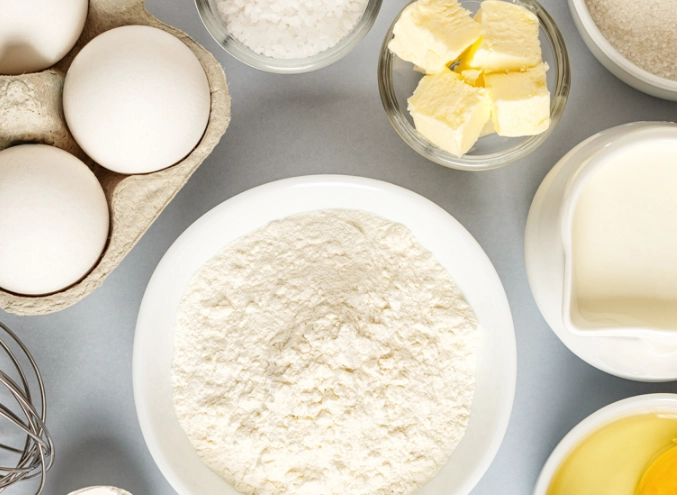
Eggs are the ultimate team players. The yolk is rich in emulsifiers (lecithin) and fats. The white is mostly water and protein. Their functions depend on how you use them:
- Structure: Egg proteins coagulate (set) when heated, providing solid structure. This is crucial for custards and setting cakes.
- Leavening: When egg whites are beaten, you're unfolding proteins that trap air, creating a foam. This foam expands in the oven. Angel food cake relies entirely on this.
- Emulsification: Yolks help blend water-based and fat-based ingredients that normally don't mix (like in cake batter), creating a smooth, stable mixture.
- Flavor, Color, & Moisture: They add richness, a golden hue, and water content.
The Physics and Process: Heat, Time, and Technique
Chemistry gives you the ingredients' potential. Physics and technique realize it.
Heat Transfer and Oven Spring
Your oven is an environment, not just a heater. The moment you put your bake in, three things happen: conduction (heat through the pan), convection (hot air currents), and radiation (infrared heat from the elements).
Oven spring is that magical, final burst of rise in the first few minutes of baking. The heat rapidly expands the gases (air, CO2, steam) and speeds up yeast activity one last time before the structure sets. A strong oven spring is the mark of a well-developed dough and proper oven temperature.
Ever had a loaf collapse? Often, the oven was too cool. The structure (from gluten and starches) didn't set fast enough to hold the expanding gases, so it rose too much and then... pop. It deflates.
Starch Gelatinization and Protein Coagulation: The Setting of Structure
These two processes are the "setting" mechanisms. They turn your fluid batter or soft dough into a solid, edible structure.
Starch Gelatinization: Around 140-158°F (60-70°C), starch granules in flour absorb water, swell, and burst, releasing starch molecules that thicken the surrounding liquid. This gives cakes and breads their final, set crumb. It's why a toothpick comes out clean—the starch has set.
Protein Coagulation: Egg and gluten proteins unwind and bond together into a solid network, typically between 149-185°F (65-85°C). This works in tandem with starch gelatinization to lock in the shape and air bubbles.
The race:
Successful baking is a race between rise and set. You want maximum expansion (rise) to happen before the structure permanently sets. That's why preheating is non-negotiable. A cold oven prolongs the setting time, leading to excessive spread (cookies) or a coarse texture (cakes).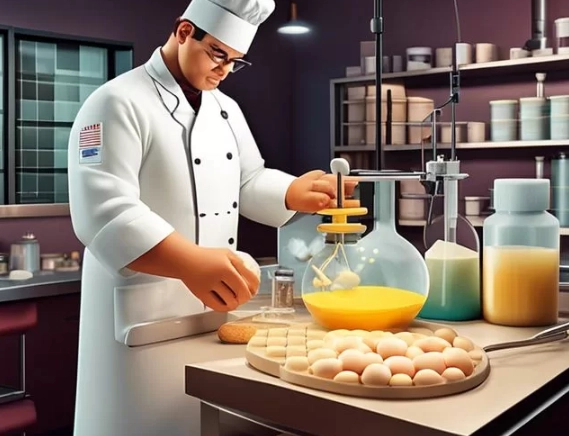
Common Baking Fails, Scientifically Diagnosed
Let's apply this baking science explained knowledge to real problems.
Why Did My Cake Sink in the Middle?
- Under-baking: The center's structure (starches, proteins) never fully set. It rises on hot air but collapses as it cools because there's no solid network to hold it up.
- Too Much Leavener: The batter rises too quickly, creating huge, unstable bubbles that collapse before the structure can set.
- Opening the Oven Door Too Early: A sudden drop in temperature can cause the fragile, partially set structure to fall.
Why Are My Cookies Flat as a Pancake?
- Butter Too Warm: If your butter was melted or very soft, it can't hold air cells during creaming. It also spreads instantly in the oven.
- Incorrect Flour: Maybe you used a low-protein flour when the recipe needed more structure.
- Warm Baking Sheet: Putting dough on a hot sheet causes immediate spread before the setting reactions kick in. Always use cool sheets.
Why Is My Bread Dense and Gummy?
- Under-proofing: The yeast didn't produce enough gas to create an open structure.
- Over-proofing: The gluten network over-stretched, became weak, and collapsed, trapping nothing.
- Over-kneading (sometimes): Can damage the gluten network, though under-kneading is a more common home baker issue.
Putting It All Together: Baking as a Controlled Experiment
The goal of baking science explained isn't to turn you into a lab coat-wearing robot. It's to give you the tools to think like one. To observe, hypothesize, and adjust.
Your kitchen variables matter: your oven's true temperature (get an oven thermometer!), the humidity that day (affects flour absorption), even the altitude. High-altitude baking is a whole other chapter of baking science explained because lower air pressure affects leavening and evaporation rates.
The next time you bake, pay attention. Watch how the butter and sugar look when creamed—it should be pale and fluffy. Feel how the dough comes together. Smell the Maillard reaction happening. Use the science as your lens, and you'll start to see not just recipes, but processes and possibilities.
It transforms baking from a series of steps to follow into a language you can speak. And when something goes wrong, you won't just be frustrated. You'll have a pretty good idea of whodunit—whether it was an overzealous mixing hand, a tired leavener, or an oven running cold. And knowing is more than half the battle; it's the path to the next, better bake.



Leave a Comment