Forget the boring textbook. The most exciting science classroom might be right next to your fridge. Baking with kids isn't just about making a sweet treat; it's a hands-on crash course in chemistry, physics, and even biology. Every time you mix flour and water, watch dough rise, or see cookies turn golden brown, you're witnessing scientific principles in delicious action.
I've been baking with my own kids and running kitchen science workshops for over a decade. The moment a child's eyes light up because they finally understand why the cake rose—not just that it did—is the real reward. Most guides tell you what to do. I want to show you and your kids the why behind it all.
What's Inside This Guide?
Your Kitchen as a Science Lab
Before you preheat the oven, shift your mindset. You're not just a baker; you're a lab director. Your tools have new names.
The mixing bowl is your reaction vessel. The measuring cups and spoons are for precise chemical ratios—baking is less forgiving than a soup where you can just "add a bit more." The oven is your controlled heat source, initiating and speeding up chemical reactions (like the Maillard reaction that creates flavor and color).
Pro-Tip Most Guides Miss: Let your kids get their hands dirty—literally. Feeling the change in texture as flour hydrates into dough teaches them about protein networks (gluten) better than any diagram. The mess is part of the data collection.
The Magic of Leavening: Why Things Rise
This is the big one. The "poof" factor. Kids love it. There are three main scientific ways we make baked goods light and airy, and confusing them is a top mistake.
1. Biological Leavening: Yeast, The Tiny Fungus
Yeast is alive. It eats sugars (from flour or added sugar) and burps out carbon dioxide gas (CO2) and a little alcohol. The gas gets trapped in the stretchy gluten network of the dough, making it inflate like a balloon. This is fermentation. It's slow, needs warmth, and gives bread its complex flavor.
Kid-Friendly Experiment: Proof your yeast in warm water with a pinch of sugar. Let them watch the foam form—that's visual proof of life and gas production!
2. Chemical Leavening: Baking Soda & Powder Reactions
These are chemical shortcuts. They produce CO2 gas through acid-base reactions.
- Baking Soda (Sodium Bicarbonate): Needs an acid to react with (like vinegar, lemon juice, buttermilk, brown sugar, cocoa). The reaction starts immediately when wet.
- Baking Powder: Is baking soda + a dry acid (like cream of tartar) + a stabilizer (like cornstarch). It's a complete package. "Double-acting" powder reacts once when wet and again when heated.
Here’s the common pitfall: using them interchangeably. If your recipe has buttermilk (acidic) and you use baking powder instead of soda, you'll get a dense, bland cake. The reaction will be weak.
| Leavening Agent | How It Works (The Science) | Best Used In | Kid-Friendly Cue |
|---|---|---|---|
| Yeast | Biological fermentation. Living organism eats sugar, produces CO2. | Breads, pizza dough, pretzels. | "The dough is alive and breathing!" |
| Baking Soda | Chemical reaction. Needs an acid (vinegar, lemon) to create CO2 fast. | Quick breads with buttermilk, chocolate cakes, honey. | "Like a volcano experiment—it fizzes on contact!" |
| Baking Powder | Chemical reaction. Contains its own acid. Reacts when wet AND hot. | Pancakes, muffins, cakes, biscuits. | "It has a secret power-up in the oven." |
3. Mechanical Leavening: Creaming & Whipping Air
This is physics. When you vigorously cream butter and sugar, you're trapping tiny air pockets in the fat. When you whip egg whites, you're denaturing proteins and folding in air. The oven heat expands these trapped air bubbles. No chemical reaction, just clever physics.
Ingredient Deep Dive: More Than Just Flavor
Every ingredient has a job. Changing one changes the experiment's outcome.
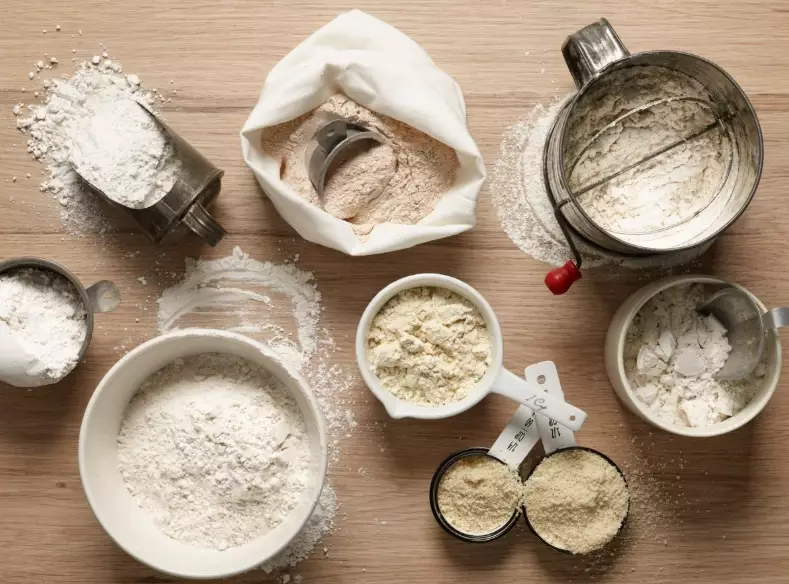
Flour: It's not just powder. The protein in wheat flour (glutenin and gliadin) forms gluten when mixed with water. More mixing = stronger gluten = chewy bread. Less mixing = tender cake. For a true science demo, wash a ball of dough under water—the starch washes away, leaving you a stretchy gluten ball.
Fats (Butter, Oil): They coat flour proteins, shortening gluten strands (that's where "shortening" comes from). This makes textures tender. They also carry flavor and, in creaming, hold air.
Eggs: The multitool. Egg yolks are emulsifiers (they bind water and fat). Egg whites, when whipped, are incredible at holding air for structure. Heat coagulates egg proteins, setting the structure.
Sugar: Beyond sweetness, it tenderizes by interfering with gluten, retains moisture, and caramelizes for color and flavor.
3 Edible Experiments & Foolproof Recipes
Let's apply the science. These are designed to highlight one principle each.
Experiment 1: The Baking Soda & Vinegar Muffin Test
Science Goal: Observe an immediate acid-base reaction.
Make a simple muffin batter base (flour, sugar, milk, oil). Divide it into two bowls. In Bowl A, mix 1 tsp baking soda with 1 tbsp vinegar in a cup first, let it fizz, then stir into batter. In Bowl B, just stir in 1 tsp baking powder. Bake both. Bowl A's muffins will peak then fall flat—the reaction happened too early. Bowl B's will be perfect. The lesson? Timing matters.
Experiment 2: The Gluten Ball
Science Goal: Isolate and see the protein network.
Give your kid a golf-ball-sized piece of bread dough or a simple flour-water dough. Let them knead it for 5 minutes. Then, put it in a bowl of water and gently massage it. The cloudy starch washes out. What's left is a gray, sticky, incredibly stretchy ball—that's mostly gluten. It's the skeleton of bread.
Experiment 3: Sugar's Role in Spreading
Science Goal: See how ingredient ratios affect physics.
Make a standard chocolate chip cookie dough. Bake one tray as is. For the second tray, reduce the white sugar by 25%. The first batch will spread more and be crisper. Sugar liquefies in the oven, increasing spread. Less sugar means a thicker, cakier cookie. It's a delicious lesson in formula.
Your Burning Baking Science Questions
 My child is scared of the oven. How can we do kitchen science safely?
The goal isn't perfection. It's curiosity. A lopsided cake that your child can explain the science of is a far greater achievement than a perfect one made on autopilot. Embrace the spills, celebrate the questions, and enjoy the delicious, educational mess. Your kitchen lab is open for business.


Leave a Comment