You've seen those perfect cookies online – sharp lines, brilliant colors, intricate designs that look impossible. The gap between your home efforts and those masterpieces isn't just talent. It's largely about the specific tools and materials professionals reach for every single time. After years in commercial kitchens and teaching classes, I can tell you it's less about magic and more about knowing exactly what to use and, just as importantly, how to use it.
Forget the generic supermarket kits. Pro-level cookie decorating hinges on a curated arsenal: precision piping tips, specific types of icing, professional-grade colorants, and a few surprise tools you might not expect. Getting these right solves 80% of the common frustrations like bleeding colors, broken lines, or flat-looking designs.
What You'll Learn in This Guide
What Professionals Use to Decorate Cookies: The Core Tool Breakdown
Let's get concrete. If you walked into a pro baker's prep area, here's exactly what you'd find on their table, and why each piece matters.
1. Piping Tips & Bags: Where Precision is Born
This is the non-negotiable starting point. Professionals almost universally use disposable plastic piping bags. Why? No cleanup, no grease stains, and no risk of residual oils from a cloth bag breaking down your icing. Brands like Ateco or Wilton are staples.
The real magic is in the tips. While a hobbyist might have a few, a pro has a dedicated set. The most critical ones for outlining and flooding are the round tips. Here's the kicker most tutorials miss: Tip size is not one-size-fits-all. Using a #1 tip for a large cookie outline is torture, and using a #5 for fine detail is impossible.
Pro Insight: New decorators often choke their piping bag by overfilling it. Fill it only halfway. This gives you way more control and prevents the icing from heating up and thinning out in your hand. It feels less efficient, but it's the key to clean lines.
| Tip Number | Best Use Case | Pro Tip (Literally) |
|---|---|---|
| #1 or #1.5 | Extremely fine details, writing, hair strands. | Requires perfect 15-second icing. Any thicker and it clogs, any thinner and it blobs. |
| #2 or #3 | Standard outlining for most cookies. The workhorse. | If you buy one tip, make it a #2. It's versatile for outlines and small fill areas. |
| #4 or #5 | Thicker outlines, bordering, or flooding smaller shapes. | Great for beginners as it's more forgiving with slightly off icing consistency. |
2. The Icing Itself: Royal Icing is King (and Queen)
Buttercream is for cakes. For decorated cookies that need to set hard, be stacked, and ship, royal icing is the undisputed professional choice. It dries to a smooth, matte finish and acts like edible cement.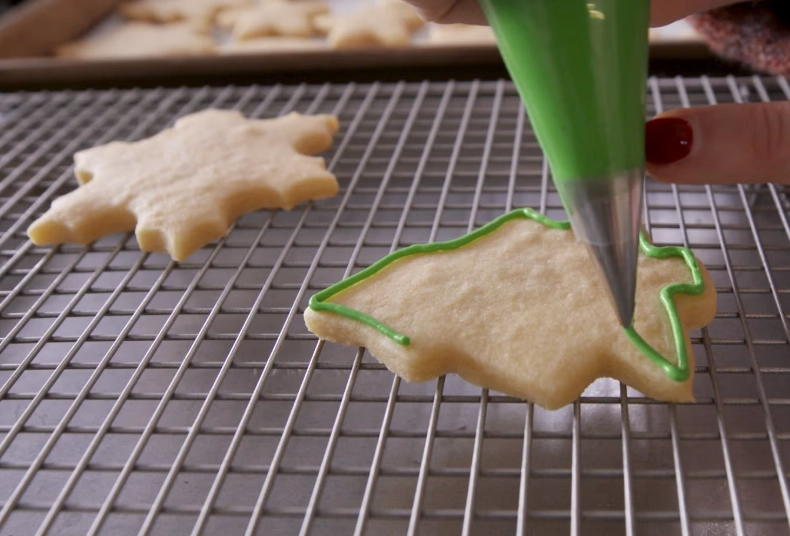
The base is simple: confectioners' sugar, meringue powder (or egg whites), and water. The "pro" part is in the meringue powder. Brands matter. I've had consistent success with brands like Wilton or Chefmaster. Some high-end shops use pasteurized egg whites, but meringue powder is safer, more stable, and shelf-stable. A report from the American Bakers Association often cites food safety as a key concern for professional operations, which is why meringue powder is the industry standard.
Flavorings? Professionals use clear vanilla or almond extract to keep the icing pure white. Any colored extract will tint your icing beige.
3. The Humble but Essential Support Crew
- Scribe Tool or Toothpick: This is your error eraser and flow director. After flooding an area with icing, use the point to pop air bubbles and nudge icing into tight corners. A dedicated scribe tool is cheap and better than a toothpick.
- Turntable: Not just for cakes. A lightweight turntable lets you rotate the cookie as you pipe, ensuring even pressure and smoother lines. It's a game-changer for circular designs.
- Good Lighting: This sounds obvious, but working under a bright, daylight-balanced lamp prevents eye strain and lets you see the true colors of your icing.
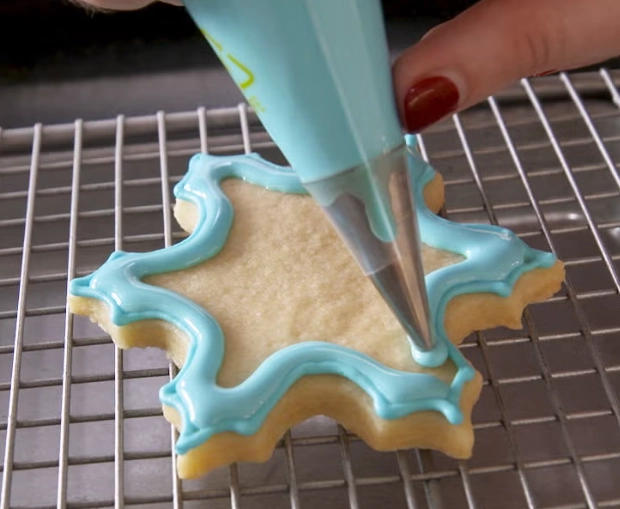
How to Use Royal Icing Like a Pro: It's All About Consistency
Here's the single biggest mistake I see: people using one batch of icing for everything. Professionals make multiple consistencies from one base batch. Think of icing like paint: you need a thick one for outlines and a thin one to fill in.
We talk about consistency in "seconds." How many seconds does it take for a dollop of icing to melt back into itself after you drag a knife through it?
- Outline Consistency (20+ seconds): Thick, like toothpaste. Holds a peak. This is for drawing the dam that will hold your flood icing.
- Flood Consistency (10-15 seconds): The sweet spot. When you drag a knife through it, the line disappears in 10-15 seconds. It's fluid enough to flow but not so runny it goes over your outlines.
- Detail Consistency (20+ seconds, but thinner than outline): A slight variation for delicate work. Still holds a line but can come out of a #1 tip smoothly.
How do you get there? Start with a thick batch. Then, in a separate bowl, thin it down one teaspoon of water at a time. Mix for a full minute between additions. Icing has a delayed reaction. Adding three teaspoons at once will almost certainly over-thin it, and you can't go back. This patience is what separates a pro result from a messy one.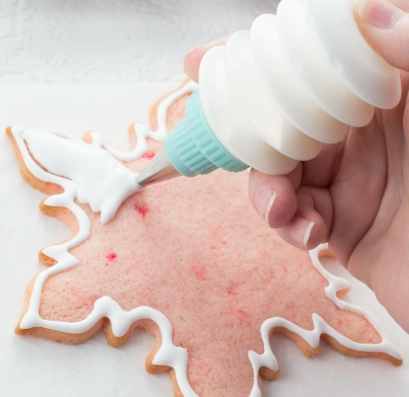
Advanced Decorating Materials & Techniques
Once you have the piping down, pros layer in other elements for texture and depth.
Edible Paints & Dusts
Airbrushing creates gradients and soft backgrounds that piping can't. A basic single-action airbrush kit (like from Master Airbrush) paired with airbrush-safe food colors (highly concentrated liquids) opens up a new world. You can stencil with it, too.
Edible luster dusts mixed with a drop of clear alcohol (like vodka, which evaporates) become a metallic paint for stunning accents. This is huge for holiday cookies.
Molds & Embossers
For consistent, intricate shapes like flowers or lace, professionals use silicone molds with fondant or gum paste. They let you make 3D decorations in advance. An embosser (like a small rolling pin with a pattern) can imprint a design directly onto the cookie dough before baking, giving you a guide to flood later.
The "Hot Knife" Technique (A Hidden Gem)
This is a perfect example of a pro trick rarely mentioned. After flooding a section, you can create a marbled or "feathered" effect by dropping dots of a different colored flood icing on top and then dragging a hot knife gently through them. The heat slightly melts the surface, blending the colors in a controlled, beautiful way. A butter knife run under hot water and dried works perfectly.
Cookie Decorating FAQ: Pro Answers to Your Tricky Questions
Why do my cookie outlines keep breaking or look jagged?
Two main culprits. First, your icing is too thick. You're fighting it as it comes out of the tip, causing jerky movements. Thin it slightly. Second, you're holding the bag too high. Hold the tip just barely above the cookie surface. Let the icing lay down onto the cookie, don't "draw" it on from an inch away.
My colors keep bleeding into each other. I let the first layer dry overnight!
This is almost always caused by over-saturating your icing with liquid food coloring. Using drops from the grocery store adds too much water. Switch to gel or paste food colors (Americolor, Chefmaster, or Wilton Gel). They're intensely pigmented so you need just a tiny dab, and they don't change your icing's consistency. Also, ensure your base flood layer is completely dry to the touch—not just set, but dry—before adding adjacent wet colors.
Is there a professional alternative to royal icing that tastes better?
Some pros use a glace icing (just confectioners' sugar and milk/cream) for a slightly softer set and creamier taste, but it doesn't dry as hard for stacking. The real "pro" taste upgrade is in the cookie itself. Using real vanilla bean paste, a touch of almond extract, or high-quality European butter in your sugar cookie recipe makes the whole package more delicious, balancing royal icing's sweetness.
What's the one tool I should buy that feels like a "cheat code"?
A projector. Seriously. A cheap, small craft projector (like the ones used for tracing) lets you project any image onto your cookie. You just pipe over the lines. It removes all the stress of freehanding complex designs and ensures consistency across dozens of cookies. It's how many pros achieve those incredibly detailed portrait or logo cookies.
Leave a Comment