You pull your golden loaf from the oven. It smells incredible. You wait, slice into it while it's warm, and... it's good. But it's not soft. Not like the pillowy, squishy, stays-fresh-for-days softness of the bread you buy at the store. It's a bit denser, a tad chewier, and by tomorrow, it might double as a doorstop.
I've been there. For years, my "artisan" loaves had a satisfying crust but a crumb that was more workout than wonder. The secret isn't one magic trick. It's a combination of ingredients and process that commercial bakeries have optimized, and that home bakers often overlook in pursuit of "natural" or "simple" recipes.
Let's fix that. Here’s how to bridge the gap between hearty homemade and reliably soft store-bought.
What You'll Learn In This Guide
Why Store-Bought Bread Wins the Softness Game (It's Not Just Preservatives)
First, let's demystify the enemy. Commercial bread uses a few key players you won't find in a basic flour-water-salt-yeast recipe.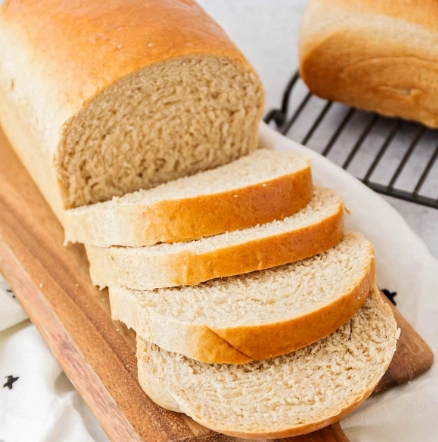
Dough Conditioners & Emulsifiers: Ingredients like diacetyl tartaric acid ester of monoglycerides (DATEM) or soy lecithin. These aren't just scary chemicals; they're tools. They strengthen gluten gently, allowing the dough to hold more gas and water, resulting in a higher, more uniform rise and a softer crumb. They also keep bread soft by preventing starch from recrystallizing too quickly (that's staling).
Enzymes: Amylases and hemicellulases are often added. Amylases break down some starch into sugar, which yeast loves (better rise) and which also keeps the bread moist. Hemicellulases relax the dough, making it more extensible and the final bread more tender.
High-Hydration Formulas & Precise Machinery: Commercial mixers can handle very wet, sticky doughs that would frustrate a home baker. More water in the dough means a softer final crumb. Their proofing boxes offer perfect, consistent humidity and temperature.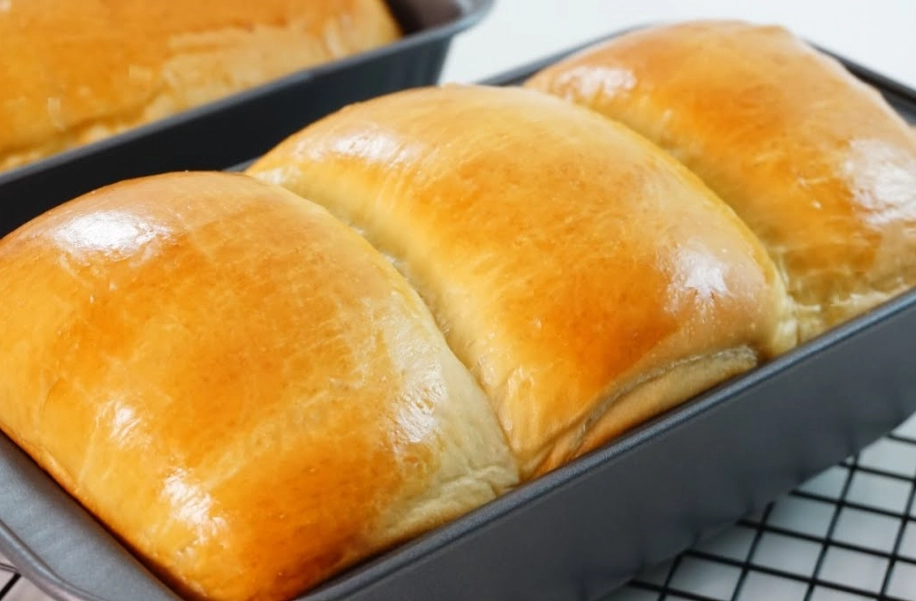
The good news? We can mimic the effects of these "secret" ingredients with things already in your pantry and by tweaking your technique. We're not trying to make an artificial product, but to understand the principles of softness and apply them naturally.
Your Softness Toolkit: The Must-Have (& Often Overlooked) Ingredients
Forget the idea that pure bread is just flour, water, yeast, salt. For softness, you need allies. Here’s what each one does.
1. Fats: Butter, Oil, or Eggs
Fat coats gluten strands, tenderizing them. It also traps moisture. A tablespoon or two of softened butter or a neutral oil like avocado or canola in your dough makes a world of difference. Richer doughs with eggs or milk fats are inherently softer.
2. Dairy: Milk & Powdered Milk
Using milk instead of water adds fat, sugar (lactose), and proteins that brown beautifully and create a tender crust. Dry milk powder is a secret weapon. It adds those same dairy benefits without watering down your dough. It also strengthens the dough slightly, allowing it to hold more gas. I add 2 tablespoons per 3 cups of flour.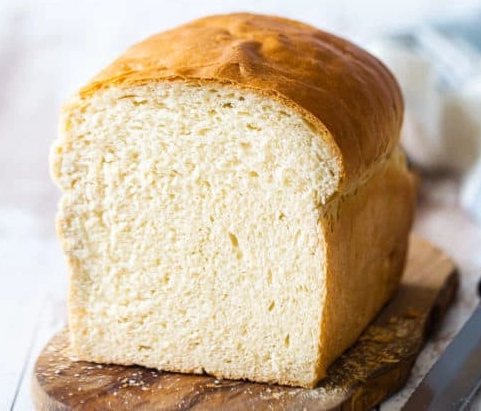
3. The Tangzhong or Yudane (Water Roux) Method
This is the single most effective technique I've adopted. You cook a small portion of the flour and water (or milk) into a paste before adding it to the main dough. This gelatinizes the starch, allowing it to absorb and hold much more water. The result? Bread that is incredibly soft, moist, and stays that way for days. It's the closest home hack to a commercial dough conditioner. Most Japanese milk bread (Hokkaido bread) uses this.
Pro Tip: Don't fear sugar. A couple tablespoons of sugar or honey isn't just for taste. It feeds the yeast for a robust rise, and it's hygroscopic—it attracts and holds moisture in the baked loaf.
4. Vinegar or Ascorbic Acid (Vitamin C)
A tiny amount (1/2 teaspoon of white vinegar or a pinch of powdered vitamin C) strengthens gluten gently and can improve the texture, mimicking some effects of dough conditioners. It's not always necessary, but it's a handy trick for whole wheat doughs that need extra help.
The Step-by-Step Process for Guaranteed Softness
Ingredients are half the battle. How you handle the dough is the other half.
Mixing and Kneading: Develop Gluten, But Don't Murder It
You need a strong gluten network to trap gas and create structure. But over-kneading, especially in a powerful stand mixer, can tear that network and lead to a tight, tough crumb.
Watch the dough, not the clock. Do the windowpane test: take a small piece and gently stretch it. If you can stretch it thin enough to see light through without it tearing immediately, you're done. For a soft sandwich loaf, this is the perfect point. For a rustic boule, you might go a bit further.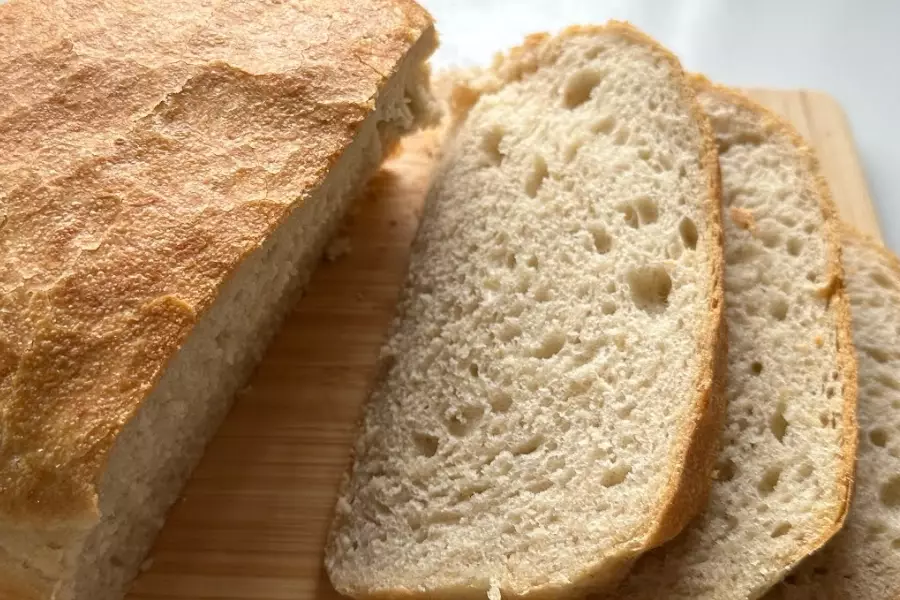
Fermentation: Slow and Low is the Way to Go
This is where most home bakers rush. A quick, warm rise makes big bubbles that collapse easily, leading to irregular texture.
I let my dough do its first rise (bulk fermentation) in the fridge overnight, or for at least 8 hours. The cold slows yeast activity, allowing enzymes to work on the flour, developing flavor and creating a stronger, more elastic gluten network that can support a finer, softer crumb. A slow-rise dough bakes up with a more even, tender texture.
Shaping: Be Gentle
After the first rise, you degas the dough—gently press out the big bubbles. Don't punch it down violently. Then, shape with a light touch. The goal is to create surface tension without squeezing all the life out of it. A tight loaf will tear as it proofs, a loose one will spread. Aim for firm but gentle.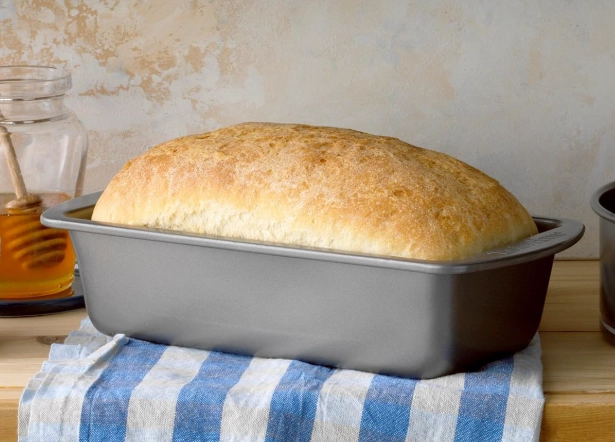
Proofing (The Second Rise): The Final Expansion
This happens in the pan. Let it rise until it's just peeking over the rim (about 1 inch above for a standard loaf pan). The "poke test" is useful: lightly flour a finger and poke the dough. If the indentation springs back slowly and leaves a small dent, it's ready. If it springs back immediately, wait longer. If it doesn't spring back at all, it's over-proofed and might collapse.
Keep it covered with a damp towel or plastic wrap to prevent a skin from forming. A dry crust during proofing limits expansion.
Baking & Storing: Don't Ruin It at the Finish Line
Baking for a Soft Crust
A hard, thick crust is the enemy of perceived softness. For a soft sandwich loaf, you want a thin, golden, slightly tender crust.
Steam is your friend for the first part of baking. It keeps the dough surface flexible so it can expand maximally (called "oven spring") and delays crust formation. I put a metal pan on the bottom rack while the oven preheats. When I load the bread, I toss a cup of ice cubes into the hot pan and quickly shut the door.
Temperature matters. Bake at 375°F (190°C) for a softer crust. Higher temps (450°F+) give a crispier crust. For a very soft, almost non-existent crust, you can "bake" the loaf covered for the first 20-25 minutes (use an inverted roasting pan or the lid of a Dutch oven if your loaf pan doesn't have one).
The Critical Cooling Phase
I know it's tempting. Do not slice warm bread. The structure is still setting. Slicing it releases a torrent of steam—the very moisture that keeps it soft. Let it cool completely on a wire rack, at least 2-3 hours. This is non-negotiable for the right texture.
Storing to Maintain Softness
Never store bread in the fridge. The cold accelerates starch retrogradation (staling) by a factor of six. It goes stale fastest between 32°F and 50°F.
For short-term (2-3 days): Once completely cool, store it in a plastic bag or airtight container at room temperature. The crust will soften, which is what you want for a soft loaf.
For long-term: Slice, then freeze in a freezer bag. Thaw slices at room temperature or toast directly from frozen. Freezing locks in the moisture and pauses staling.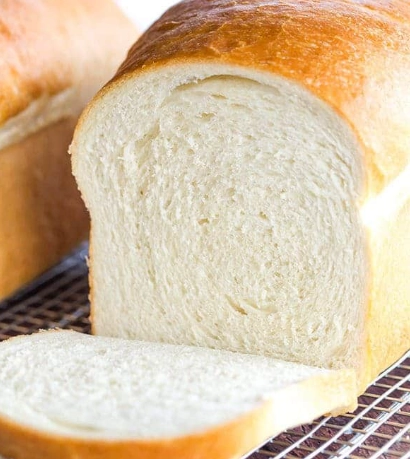
Your Soft Bread Questions, Answered
Why does my homemade bread get hard the next day?
It's almost always about moisture loss, or a lack of ingredients that retain it. Bread stales as its starch molecules recrystallize, pushing out water. Store-bought bread uses dough conditioners and emulsifiers to slow this down dramatically. At home, adding fats (butter, oil), dairy (milk, powdered milk), or a tangzhong starter creates a softer crumb structure that holds onto moisture much longer.
Can I make soft bread without a stand mixer?
Absolutely. Hand-kneading can actually give you better control. The key is to develop the gluten fully, which takes about 10-15 minutes of steady kneading. Look for the 'windowpane test': stretch a small piece of dough. If you can stretch it thin enough to see light through without it tearing, your gluten is ready. Don't rush this stage; under-kneaded dough leads to a weak, crumbly structure that can't support softness.
What is the single most important ingredient for soft bread?
If I had to pick one, it's not an ingredient you'd expect: it's patience during fermentation. Rushing the rise is the most common mistake. A slow, cool first rise (bulk fermentation) allows for complex flavor development and a more even, airy crumb. A loaf that doubles in size in 1 hour at 80°F will have larger, more fragile bubbles than one that takes 3 hours at 70°F. The slower loaf will have a finer, more resilient, and ultimately softer texture.
Does bread flour or all-purpose flour make softer bread?
This is a nuance most recipes miss. Bread flour, with its higher protein (12-14%), creates stronger gluten, leading to a chewier, more structured loaf like a baguette. For maximum softness, all-purpose flour (10-12% protein) is often better. It gives enough structure to rise well but results in a more tender bite. For an ultra-soft sandwich loaf, some bakers even use a blend of 80% all-purpose and 20% cake flour. The lower protein content directly correlates with a softer final product.
Soft homemade bread isn't a mystery. It's a choice. It's choosing to add a bit of fat and dairy, to try the tangzhong method, to let time work its magic in the fridge, and to resist the urge to slice into a warm loaf.
The goal isn't to replicate a plastic-wrapped loaf exactly. It's to take that satisfying, flavorful essence of homemade bread and give it the tender, lasting texture we all love. Start with one change—maybe add dry milk powder to your next recipe, or try an overnight fridge rise. You'll feel the difference in the dough, see it in the oven spring, and finally, taste it in that perfectly soft, satisfying slice.



Leave a Comment